1887 –1941
Severyanin Igor Vasilyevich
The futurist poet, who served in the Novocherkassk regiment in 1916
Igor is associated with the following objects
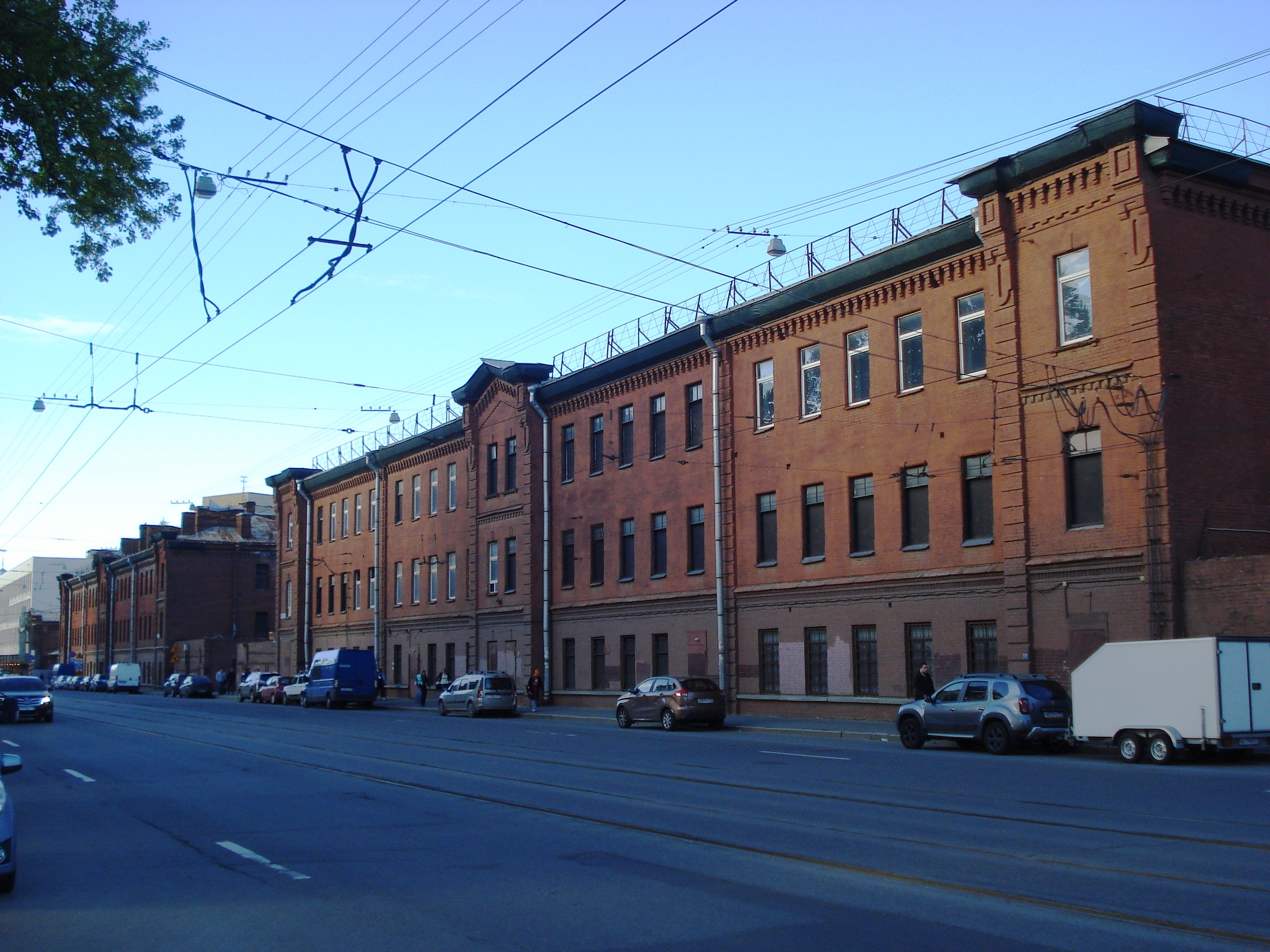
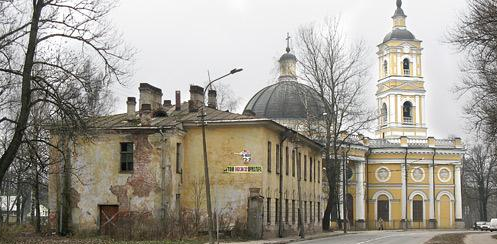
Barracks of the Novocherkassk Regiment
1886

One of the most peculiar representatives of the Russian Silver Age, who was convinced from his own experience that the army is not a place for a poet.

Igor-Severyanin (that's how, hyphenated, he wrote his pseudonym himself) joined the 145th Infantry Novocherkassk regiment of Emperor Alexander III  in the spring of 1916. In the regimental  lists, a private of the 6th company was noted under his real name - Igor Vasilyevich Lotarev (1887-1941). At that time, he was already a fairly well-known poet, the author of several collections of poetry. Moreover, Igor Severyanin has not only become the founder of egofuturism, but also managed to dissociate himself from this literary trend that developed within the framework of futurism.

In the barracks of the regiment on Malaya Okhta (at the beginning of Novocherkassky Avenue), the poet met the aspiring writer Leonid Ilyich Borisov, who was ten years younger (1897-1972). They served together for less than two weeks. They lived on the second floor of wooden bunks, next door. We had intimate conversations at night. They read their poems to each other in a half-whisper.

Of course, the army life with the regulations and drill did not arouse special sympathy from the Northerner. He was a purely civilian man. Soon after the draft of the future "king of poets", according to the conclusion of the medical commission, he was released from military service "for pure reasons". Apparently, thanks to the powerful protection (that is, the gang), and not for health reasons.

Leonid Borisov wrote about the short-lived military "career" of Severyanin in his memoirs ("At the round table of the past. Memories"). In them, in particular, there is such an episode. Once, at a shooting practice with a small-caliber rifle, Private Lotarev hit the target with three out of five bullets. The battalion commander praised him: "Well done, soldier!" In response, the poet, slightly turning towards the commander, casually threw: "Mercy, Mr. Lieutenant Colonel!" From such insolence of the battalion, of course, almost had a stroke. He froze, then burst into a choice curse and ordered to name the "private with a horse's head" in a new way: Mercy. In fact, Igor Lotarev, Severyanin, had to respond to the French "name". However, the poet had very little time left before the "demob".

Once in civilian life, Severyanin definitely did not miss the army:
On rotten Okhta, in the barracks of stone,
Where it is daily sad, and at night, even cry,
I, oppressed by dreams like a stone,
Ordered my heart: be silent, don't cry.
Revenge on the poet’s persecutors for everything:
For sour cabbage soup and a faceted bayonet.
To all the wild and terrible millions of detractors,
For the torments to which the poet is not used.
To the next personality
1878 –1939
Petrov-Vodkin Kuzma Sergeyevich
An outstanding artist who spent part of his early childhood in Malaya Okhta.
Kuzma is associated with the following objects
Barracks of the Novocherkassk Regiment
1886
A remarkable Russian painter, art theorist, teacher, and writer, whose first childhood acquaintance with St. Petersburg occurred thanks to his father's service in the Novocherkassk Regiment.
Kuzma Sergeyevich Petrov-Vodkin (1878–1939) was a vibrant, original artist whose biography and creative destiny are closely connected with St. Petersburg – Petrograd – Leningrad. It all began in Malaya Okhta, where little Kuzma arrived in the early 1880s. The 145th Infantry Novocherkassk Regiment, where his father served, was stationed here. His father was a shoemaker from Khvalynsk, Saratov Province.

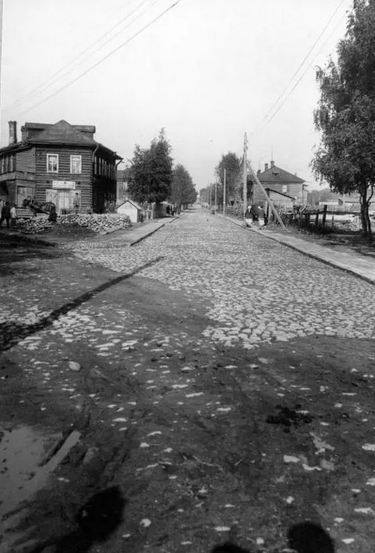
The future painter and his mother, Anna Panteleevna, settled in the mezzanine of an old, rickety wooden house owned by the widow Zadedina. This house was located on Pustaya Street, which, as Petrov-Vodkin recalled many years later, was not much different from the streets of his native provincial town: "Scattered houses alternated with vacant lots. In summer, the street was overgrown with grass, with pigs and piglets roaming in the thickets. In autumn, pedestrian walkways laid along the street saved us from the impassable mud." Pustaya Street was one block long. To the west, it "ran down to the Neva," and to the east, it "ended at a long street with only fences and vacant lots," which led to the Novocherkassk barracks.

Pustaya Street, running from Malookhtinsky Avenue to Novocherkassky Avenue, was officially abolished on May 15, 1965. It was located south of the current Pomyalevsky Street, which from 1865 to 1962 was called Suvorovskaya.

Petrov-Vodkin spent two years of his "first St. Petersburg period" in Malaya Okhta. In a small room with one window and an iron stove, where his mother worked on a Singer sewing machine and his father brought pots of cabbage soup and porridge from the barracks, Kuzma learned to read and write. The events of these two years, vividly remembered, were later described by the artist in two chapters of his autobiographical story "Khlynovsk": "Okhta – Pustaya Street" and "Barracks." This story, published in 1930, is a true treasure trove of valuable biographical information and evidence of the author's undeniable literary talent.

The boy, whom the soldiers called Kuzyakha, sometimes spent entire days in the barracks. He knew his father's comrades well and was considered one of their own by the Novocherkassk soldiers. However, contrary to popular belief, he could not have visited the surviving red-brick barracks, as the buildings for the regiment's headquarters and three battalions were constructed in 1884–1886, and for the fourth battalion in 1893. Sergei Fyodorovich Vodkin, apparently, served in the Novocherkassk Regiment from 1881 to 1884 and could have only witnessed the beginning of the construction of these barracks. Kuzma and his mother returned to Khvalynsk before the head of the family.

Subsequently, Petrov-Vodkin returned to the city on the Neva many times. He studied, worked, and taught here. The creator of such famous paintings as "Bathing of a Red Horse" (1912), "1918 in Petrograd" ("Petrograd Madonna"; 1920), and "Death of a Commissar" (1928) also died here, in Leningrad, and was buried at the Literary Footpaths of the Volkovo Orthodox Cemetery.
To the next personality
1962 –1990
Tsoi Viktor Robertovich
A popular rock musician, artist, actor, and poet.
Viktor is associated with the following objects
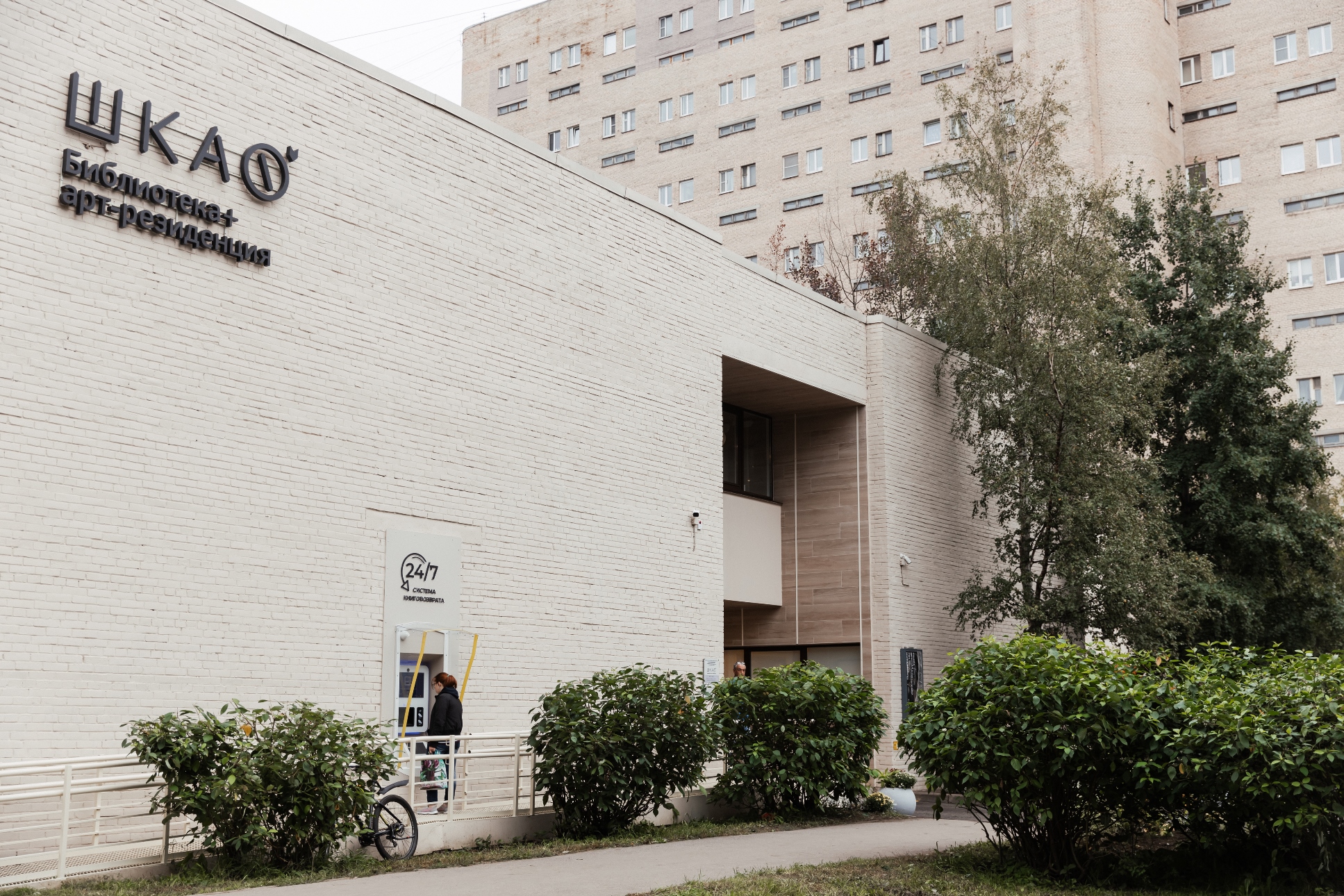
Library and Art Residence SHKAF
1984
In the early 1980s, when the band "Kino" had not yet gained popularity, its leader and vocalist lived "somewhere on Bluchera Street" and traveled home every day on the legendary trolleybus "that goes to the East."
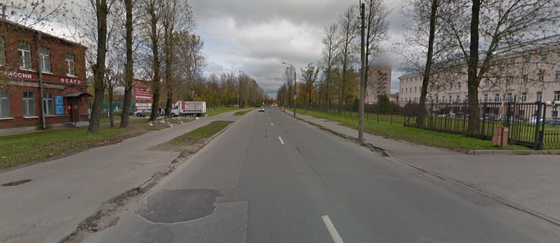
Viktor Robertovich Tsoi was born on June 21, 1962, to a Korean engineer and a Russian teacher. The future famous Leningrad rock musician spent his childhood years in the Moskovsky district, where he moved between several addresses that are well known to fans. A cult place for fans of Viktor Tsoi's work is the famous boiler room "Kamchatka," where many stars of the Leningrad rock club worked. In 1982, Viktor Tsoi founded the band "Kino." The first recordings of the young band were made in Andrey Tropillo's semi-legal studio, located in the House of Pioneers at 23 Panfilova Street, where the Center for Children's (Youth) Technical Creativity "Okhta" is now located. Tropillo was then the head of the recording circle open there; during the day, he taught schoolchildren the basics of working with microphones and recording devices, and at night, he recorded young performers. In 1983, Viktor and his wife Marianna lived, according to friends' recollections, "somewhere in a small apartment on Bluchera Street." No one remembered the exact address, but Marianna described this period of their lives as follows: "January of '83, I remember it well, was excessively harsh. Our house was so stupidly located that the only way to get to it was by trolleybus. There was a trolleybus ring near the house - the third, nineteenth, and another one. And these trolleybuses really didn't like running in twenty-degree frosts; if they did run, it was very slowly. We were freezing terribly. We were sick of those trolleybuses." This trolleybus ring was and still is located opposite school No. 180 on Marshala Tukhachevskogo Street. Before arriving at the final stop, the trolleybuses passed a long straight section on April Street, where they picked up speed. It can be assumed that the forced nature of the trips and the cold winter inspired the musician to write the song "The Trolleybus Going East." After gaining popularity, Tsoi performed a lot, acted in movies, and mainly lived in Moscow, but he did not forget his childhood city, regularly returning and renting an apartment on Toreza Avenue. On August 15, 1990, Viktor Tsoi tragically died in a car accident. The musician was buried at the Bogoslovskoe Cemetery in Piskaryovka, where many flowers, photos, and memorabilia are still brought today.
To the next personality
1800 –1879
Kern Anna Petrovna
The muse of Alexander Pushkin and the granddaughter of the owners of the estate known to the people of St. Petersburg as Utkin Dacha.
Anna is associated with the following objects
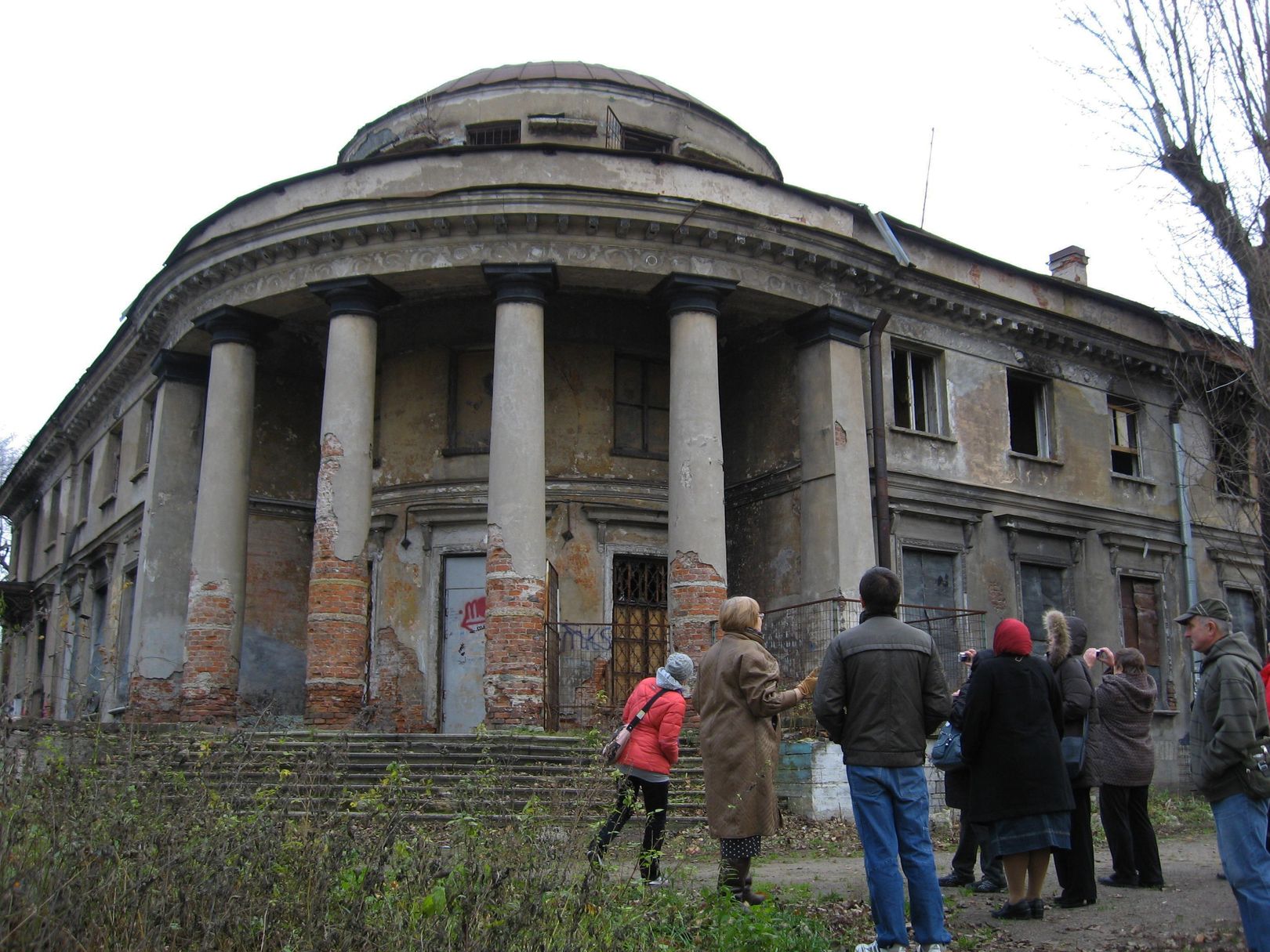
Utkina dacha
1790
She entered Russian literary history as the addressee of the remarkable Pushkin poem "To *" ("I remember a wonderful moment..."). However, few people know that Anna Petrovna Kern was the granddaughter of the Poltoratskys, the owners of the estate at the confluence of the Okkervill River and the Neva.
Anna Petrovna Kern (1800–1879) is primarily known as the woman who inspired Alexander Sergeyevich Pushkin to compose the lyrical poem "To ***" ("I remember a wonderful moment..."). Pushkin also dedicated several humorous poems to her. Additionally, their correspondence has survived. However, Anna Petrovna’s identity is not solely defined by her role as Pushkin’s muse. Among the many remarkable people in Alexander Sergeyevich's circle, she did not fade into obscurity, nor was she just a name on Pushkin’s list of conquests. Her significance goes beyond the famous poem that immortalized her name. Beneath the familiar label of a fashionable beauty lies a figure of considerably greater stature.

Interestingly, we have only a vague idea of Anna Kern’s appearance. There are very few portraits of her, and almost all are speculative. More telling are the diaries and memoirs of Anna Petrovna. These are detailed, accurate, and vivid, offering a clear picture of her character and providing valuable insights into her distinguished contemporaries: Pushkin, Anton Antonovich Delvig, Mikhail Ivanovich Glinka, and Alexander I.

Anna Petrovna’s fate was significantly influenced by her extremely unfortunate marriage to Yermolai Fyodorovich Kern (1765–1841), a hero of the Patriotic War of 1812. They were married in January 1817, when Anna was still not yet seventeen, and the general-major (later general-lieutenant) was over fifty. As Anna Petrovna later wrote, she was married "too early and too indiscriminately." Her dislike for her husband seemingly extended to her attitude toward their children (the couple had three daughters: Yekaterina, Anna, and Olga). The life of a general's wife, with constant relocations from one city to another and the atmosphere of inspections and drills, was burdensome for the impressionable and energetic Anna. Moreover, the old soldier Kern was probably far removed from the interests and aspirations of his young wife.

In the winter of 1825–1826, pregnant with her third daughter, Anna Petrovna left Yermolai Fyodorovich and moved to St. Petersburg. By making this bold move, she effectively buried her reputation as a "respectable woman." Aristocrats might overlook infidelities and even affairs, but an open separation from a spouse caused a scandal and nearly closed the doors of society to the charming Anna Petrovna. She was supported by friends, including almost the entire Pushkin family. In the Delvig household, she "felt at home," and Anton Antonovich jokingly referred to her as wife number two. Anna attended literary evenings where guests included Ivan Andreyevich Krylov, Vasily Andreyevich Zhukovsky, Nikolai Ivanovich Gnedich, Pyotr Andreyevich Vyazemsky, Dmitry Vladimirovich Venevitinov, and Adam Mickiewicz. Interestingly, one of Anna Kern’s friends was engineer Pyotr Petrovich (Pierre-Dominique) Bazin, who worked on the reconstruction of the hydraulic structures at the Ohtinsky Powder Factory in the 1820s and 1830s. According to Anna Petrovna’s recollections, it was Bazin who introduced her to Mikhail Glinka in 1826. Later, around the 1830s–1840s, the composer was in love with Anna Kern’s elder daughter, Yekaterina, and dedicated the romance "I Remember a Wonderful Moment" to her, based on Pushkin’s verses. However, Mikhail Ivanovich and Yekaterina Yermolaevna never married.

Despite numerous disappointments, Anna Petrovna did find personal happiness. In 1836, she began a romance with 16-year-old cadet Alexander Vasilyevich Markov-Vinogradsky (1820–1879), her second cousin. In 1839, the couple had a son named Alexander. Yermolai Kern died in 1841, and in 1842, Anna and Alexander married. For the sake of her legal marriage, Anna Petrovna relinquished her title of "Excellency," a substantial pension, and other privileges that were due to her as the widow of a general. Additionally, Anna’s father, Pyotr Markovich Poltoratsky, deprived her of all inheritance rights.

Anna Petrovna’s maiden name again connects us to Ohta. She was the granddaughter of Mark Fyodorovich and Agafoklea Alexandrovna Poltoratsky, who owned the estate at the confluence of the Okkervill River and the Neva. This estate is known to Petersburgers as Utkin Dacha. Remarkably, another of Pushkin’s muses, Anna Alexeyevna Olenina, was also a granddaughter of these Poltoratskys! In other words, Anna Petrovna and Anna Alexeyevna were cousins. Incidentally, Anna Kern met Pushkin in 1819 at the home of Alexey Nikolaevich and Elizaveta Markovna Olenin.

It is well known that Anna Petrovna was a well-read individual. She avidly followed literary news, and, for instance, her diary contains a very complimentary (if brief) review of Nikolai Gerasimovich Pomyalovsky’s novella "Molotov," which was first published in the journal "Sovremennik" in 1861. Pomyalovsky, as we remember, was a native of Malaya Okhta.

The unusual union of Anna and Alexander Markov-Vinogradsky withstood the test of time, social disapproval, family opposition, chronic poverty (they even had to sell Pushkin’s letters – for five rubles each), and domestic instability. They lived together for four decades, maintaining an incredibly warm relationship and deep affection for each other. Alexander Vasilyevich passed away in January 1879. In May of the same year, Anna Petrovna died. Only the inclement weather and poor road conditions prevented them from being buried in the same cemetery.
To the next personality
1800 –1855
Kushelov-Bezborodko Alexander Grigorievich
One of the owners of the Kusselov-Bezborodko estate, the heir of Alexander Andreevich Bezborodko
Alexander is associated with the following objects
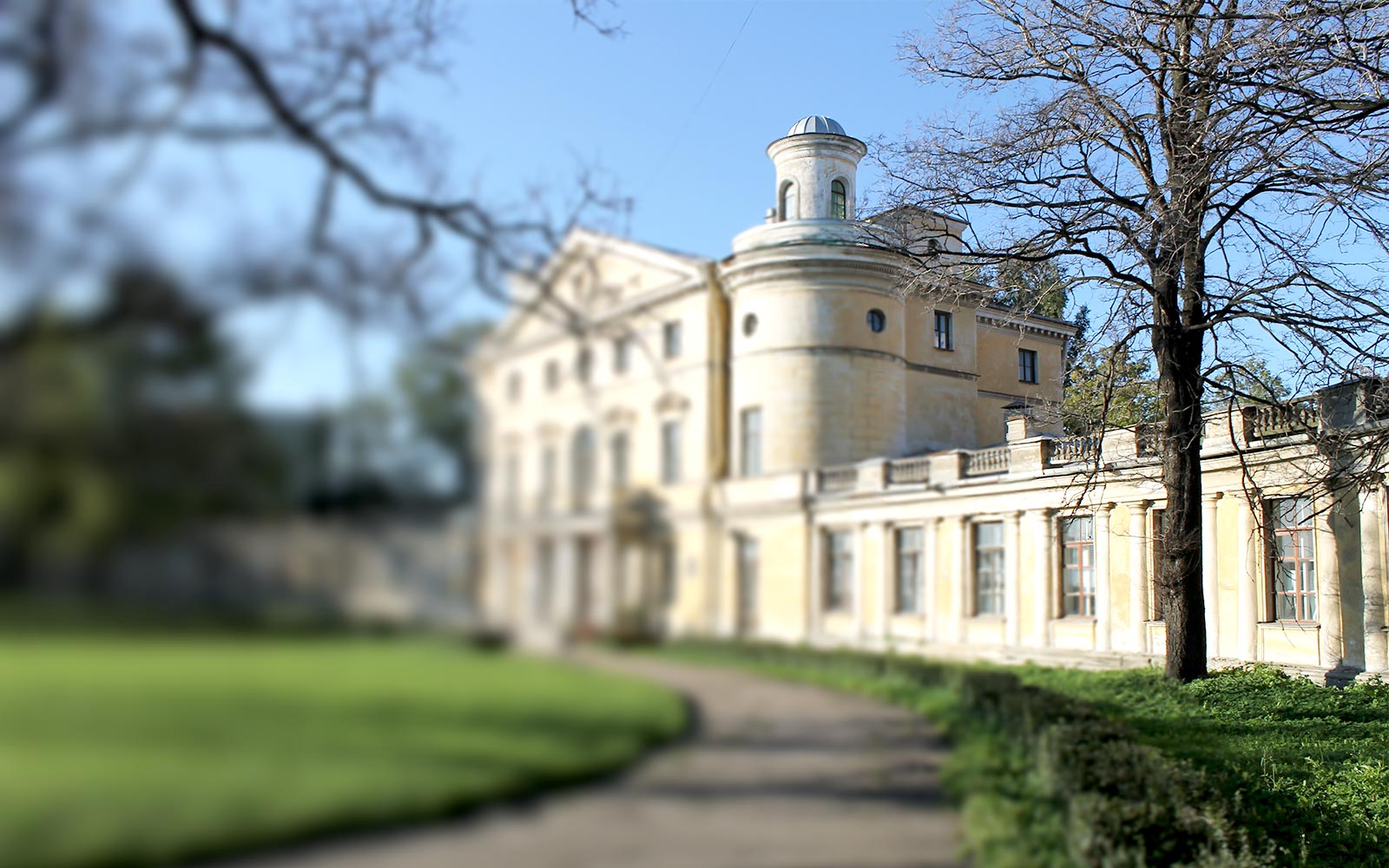
Kushelyov-Bezborodko Estate
1773
Alexander Grigorievich Kushelov-Bezborodko was the eldest son of Count Grigory Kushelov and Lyubov Ilyinichna, née Countess Bezborodko.
Alexander Grigorievich Kushelov-Bezborodko spent most of his childhood in Polyustrovo, at the suburban estate of Princess Bezborodko, inherited by his aunt, Princess K. I. Lobanova-Rostovskaya. From his guardian, the young Kushelov-Bezborodko inherited a love for order and good management.

From 1813 to 1816, he studied at the Tsarskoye Selo Lyceum. After passing the examination for obtaining a position at the pedagogical institute, he went to Moscow, where he earned a doctorate in ethical and political sciences from Moscow University. In 1817, with the rank of Collegiate Assessor, Count Kushelov-Bezborodko joined the Ministry of Foreign Affairs.

Through his father's patronage, Alexander Grigorievich was assigned to deliver dispatches to Württemberg and then to serve at the emperor’s chancery during the Congress of Aachen. This opportunity allowed him not only to visit another country but also to continue his education abroad.

During his European travels, Alexander Grigorievich met many prominent figures, including the renowned Italian educator Pestalozzi. This encounter proved to be pivotal for the young count. Upon his return to Russia in 1819, he actively engaged in reforming the national educational system.

In 1820, Kushelov-Bezborodko was appointed chamberlain, and in 1826, he became a member of the Main Board of Schools. His career quickly advanced, and by 1854, he had reached his highest position as the State Controller of the Russian Empire.

Alexander Grigorievich died from "severe nervous distress" on April 6 (18), 1855. He was buried in the Holy Spirit Church of the Alexander Nevsky Lavra.
To the next personality
1747 –1799
Bezborodko Alexander Andreevich
Chancellor of the Russian Empire, under whom the Kousheliev-Bezborodko estate acquired its modern appearance.
Alexander is associated with the following objects
Kushelyov-Bezborodko Estate
1773
A statesman, a Ukrainian noble of Cossack officer origin, count, and later a prince of the blood. From 1781, after the retirement of Nikita Panin, he took on the de facto leadership of Russian foreign policy. He was the Chief Director of the Post Office of the Russian Empire.
Alexander Andreyevich Bezborodko was born on March 14, 1747, to Andrei Yakovlevich Bezborodko, the General Secretary of the Registered Cossack Army, and Evdokiya Mikhailovna Zabela, daughter of a general judge. The future Privy Councillor and confidant of Catherine II studied at the Kiev-Mogilyan Academy. During his studies, he demonstrated an aptitude for history and a phenomenal memory, which later helped him achieve a remarkable career at court.

Bezborodko arrived in Moscow in 1775 with the rank of colonel, earned for his successful military service during the Russo-Turkish War (1768–1774). He was offered the position of State Secretary to Empress Catherine II. In the recommendation provided to Bezborodko by Count Rumyantsev-Zadunaysky, under whom Alexander Andreyevich had served for over 10 years, it was written: "I present to Your Majesty a diamond in the rough: Your mind will give it value."

Indeed, at the imperial court, Bezborodko quickly mastered political intricacies and the French language. He did not neglect his passion for history; his works include several historical texts: "A Picture of the Russian Wars and Affairs with the Tatars," "Chronicle of Little Russia," and "Chronological Table of the Most Remarkable Events of the Reign of Catherine II."

Bezborodko's career advanced rapidly: in 1779 he was promoted to brigadier and granted lands in the Polotsk Province, in 1780 he was appointed "full powers for all negotiations" in the Collegium of Foreign Affairs and given the rank of major general, and in 1783 he became a member of the Russian Academy of Sciences. In 1784, Alexander Andreyevich was made second member of the Collegium of Foreign Affairs and granted the rank of Privy Councillor, as well as permission to take the title of count from the Emperor of the Holy Roman Empire.

By 1791, Bezborodko had been awarded three orders: the Order of St. Vladimir 1st class (1782), the Order of St. Alexander Nevsky (1784), and the Order of St. Andrew the First-Called (1791), conferred personally by the Empress.

A passionate patron of the arts, in 1796 Bezborodko acquired one of the richest art collections—the gallery of Count Golovkin.

Two years before his death, on the day of Emperor Paul I's coronation, Bezborodko was elevated to the rank of prince with the title of His Serene Highness.

Alexander Andreyevich Bezborodko died on April 6 (17), 1799. He was buried in the Chapel of the Annunciation at the Alexander Nevsky Lavra (now the Annunciation Mausoleum).
To the next personality
1737 –1822
Poltoratskaya Agafokleia Alexandrovna
Owner of the estate at the confluence of the Okkervil River and the Neva at the turn of the 18th and 19th centuries
Agafokleia is associated with the following objects
Utkina dacha
1790
“Feklusha, put down your dolls and get married”—with these words, the story of the union between Mark Poltoratsky, the regent of the Court Singing Chapel, and 15-year-old Agafoklea Shishkova began. She would become the owner of the Okkervil estate, a mother of many children, and one of the first businesswomen in the Russian Empire.
Agafoklea Alexandrovna Shishkova was born on June 29 (July 10) 1737, into a family of modest Tver landowners. Mark Fyodorovich Poltoratsky, who had long been acquainted with the Shishkov family, proposed to their young and, notably, very beautiful daughter. At the time, no one could have anticipated the treasure that the court singer had acquired in the form of Feklusha.

Agafoklea turned out to be a true iron lady of her time. As contemporaries noted, she had the knack for making money from virtually everything—within a few years of marriage, she turned a modest dowry into a fortune: an estate with 4,000 serfs, distilleries, and factories. Thanks to her business acumen and unyielding character, Poltoratskaya "leased out" nearly the entire Tver province. Despite her relentless work, she deeply loved her husband and was pregnant by him. The Poltoratskys had 22 children, though only 11 reached adulthood. All of them received excellent education and found their place in life.

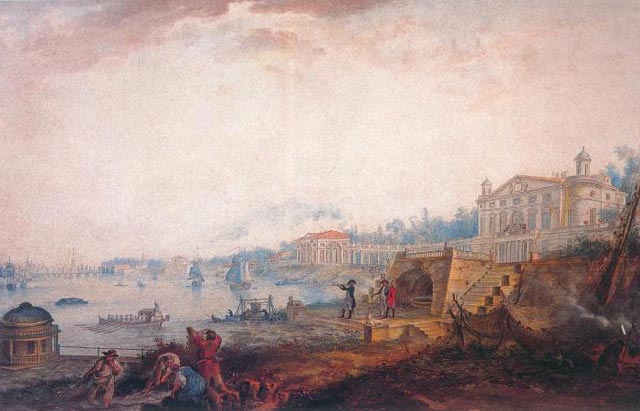
When in 1791 the Poltoratskys acquired the estate at the confluence of the Ohta and Okkervil rivers, Agafoklea set about developing the new estate. It is believed that the estate was granted to Mark Fyodorovich for his achievements in managing the singing chapel. However, L. V. Timofeev, referring to a purchase agreement dated May 4, 1791, indicates that it was Agafoklea who bought the land from Privy Councilor Gavriil Gerasimovich Donaurev, including the villages of Oblupovskaya, Malinovskaya, Kosaya Gora, and Novaya. Meanwhile, Mark Fyodorovich had his own land plot in the area of Sennaya Square, where two stone houses were built. Following the instructions of his beloved Feklusha, public baths were added to these houses. At the Okkervil estate, Poltoratskaya began the construction of a manor house and utility buildings while simultaneously maintaining and developing the family estate of Gruziny and the numerous villages she owned in the Petersburg and Tver provinces.

Just a year before acquiring the Okkervil estate, Agafoklea Alexandrovna completed the construction of the Peter and Paul Cathedral in the village of Zagorie (now Pereslegino). The construction lasted 10 years, with the renowned architect Nikolai Alexandrovich Lvov being responsible for the project. This fact suggests that upon completion of the work in Zagorie, Poltoratskaya commissioned Lvov to design the estate at Okkervil.

Under Agafoklea Alexandrovna Poltoratskaya's management, the Okkervil estate transformed into a vast and wealthy estate supplying St. Petersburg with fruits, wine, and artisanal goods.

In her later years, Agafoklea resided at the Gruziny estate. She was forced to leave St. Petersburg due to an accident on the way to Moscow. Her carriage overturned, and she sustained numerous fractures, leaving her almost immobilized. Even then, she continued to oversee her affairs, instructing her bed to be moved to the hayfield, the arable land, the distillery, or the mill as needed.

Agafoklea Alexandrovna passed away on October 12 (24), 1822, at the age of 85, having outlived her husband by 30 years.
To the next personality
1865 –1926 
Trofimov Vasily Mikhailovich
A ballistic scientist and artillery systems designer, buried at the Porokhovskoye Cemetery
Vasily is associated with the following objects
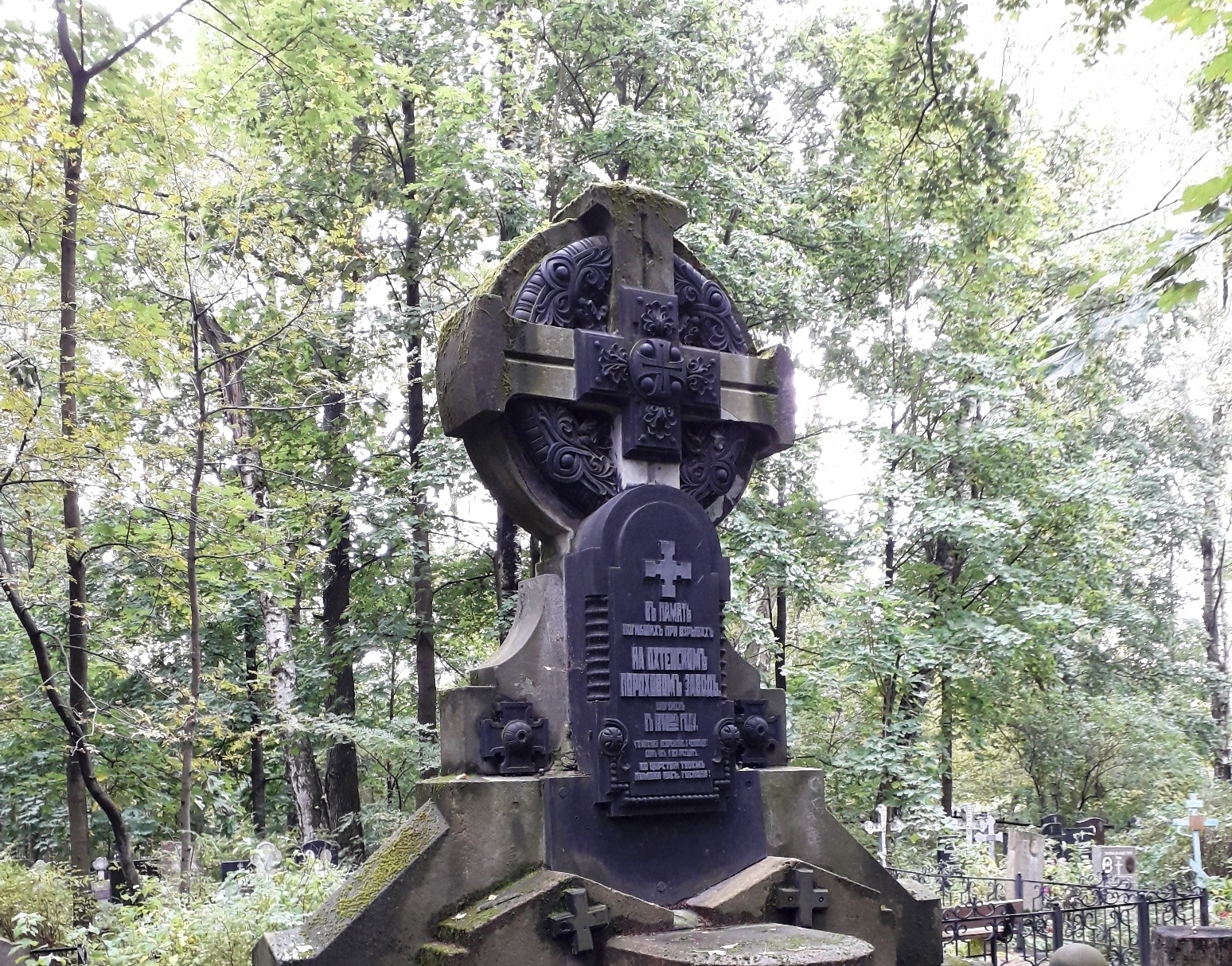
Porokhovskoye cemetery and the monument to the Porokhodols
1820
Vasily Mikhailovich Trofimov possessed profound erudition in the fields of physical-mathematical, technical, and military sciences, and had extensive experience in artillery service.
He combined the qualities of an exceptionally gifted thinker, capable of the broadest generalizations, and a talented experimenter, who could brilliantly organize and conduct the most challenging tests on the range, with those of a pragmatic artilleryman, always keeping in mind the immediate application of his research in combat conditions.
    
If you add to this his ability to identify talented colleagues, to recognize and cultivate their strongest qualities and skills, as well as his skill in creating large teams for collaborative scientific work and inspiring them with his enthusiasm and extraordinary diligence, it becomes clear why Vasily Mikhailovich Trofimov is considered one of the greatest Russian artillerymen of the early 20th century.
To the next personality
1817 –1889
Kokorev Vasily Aleksandrovich
Businessman and public figure, buried at the Malookhtinsky Old Believers cemetery
Vasily is associated with the following objects
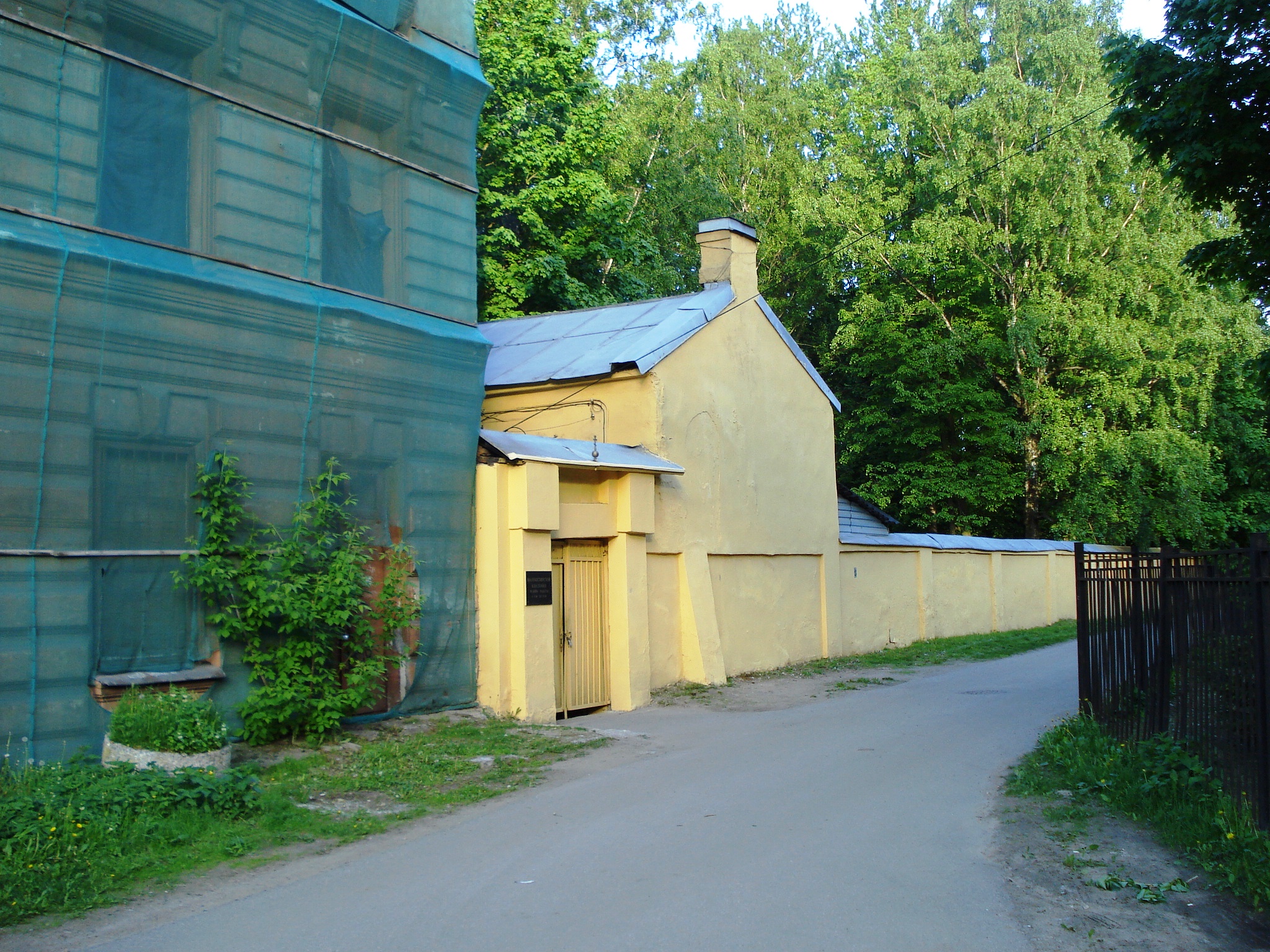
Malookhtinsky Old Believers' Cemetery
1762
One of the most versatile Russian businessmen of the 19th century, whose entrepreneurial activities extended to trade, water and rail transport, banking and insurance, and oil refining. However, Kokorev's interests were not limited to business. He wrote on economic policy issues in the press, engaged in philanthropy, supported creative individuals, and collected works of art.
Vasily Alexandrovich Kokorev (1817-1889) is a person as bright and original as he is contradictory. The future millionaire (or even billionaire) was born, according to various sources, in Vologda or in Soligalich, a district town in the north of the then Kostroma province. Vasily Alexandrovich's social origin also raises questions. Whether he was a native of the bourgeoisie or the son of a middle-class merchant who traded in salt, is not known. But all his biographers are unanimous in one thing: the Kokorevs' family was Old Believers and belonged to the Pomorian Bespovsky consensus. Vasily Alexandrovich kept the faith of his fathers until the end of his days.

Kokorev, in fact, did not receive a systematic education. Having learned to read and count, he, apparently, immediately began to work. True, it is not quite clear in what field young Vasily made his first professional steps. He either began to help his father, who was a “siteltsem” (manager) in drinking houses, or began to work in the family enterprise. The Kokorevs, according to some researchers, owned a small saltworks in Soligalich. (This town owes its name and, perhaps, its origin to the salt works). Be that as it may, the early beginning of labor activity brought certain dividends to energetic and clever Vasily. He acquired not abstract “invaluable life experience”, but concrete knowledge and skills necessary for a businessman. Vasily Kokorev filled the gaps in his education on his own, because he read a lot and enthusiastically.

Alexander Kokorev probably died early, and Vasily at a very young age became a co-owner (along with his uncles) of the above-mentioned salt factory. This enterprise, alas, turned out to be unprofitable and in the late 1830s was closed. However, Vasily Alexandrovich tried to re-profile the family business, which was already breathing on a languor, by organizing a water resort at the local mineral springs. In 1841, thanks to Kokorev's efforts, a water treatment center was opened in Soligalich. It is curious that in 1858 Alexander Porfirievich Borodin, a doctor of medicine, nowadays known primarily as a composer, came there. He produced chemical analyzed customs water and highly evaluated their target properties. (Results of research solihalich soleno-mineral water was publicized in 1859. According to available information, a large article was published in the newspaper “Moscow Vedomosti”, the introductory part of which was written by Vasily Kokorev and the main part by Alexander Borodin. The latter was soon published as a separate brochure). On the recommendation of the future author of the “Knyaz Igor” is expanded. Today the name A. P. Borodin nasit sanatorium, located in the park zone in the center Soligalich.

After the closure of the factory owned by the Kokorevs, Vasily Alexandrovich, as he himself wrote later, “was forced out of the district life to St. Petersburg to seek for a paid-off occupation”. In the early 1840s, he became a solicitor to a wine merchant and was very successful in the alcoholic field. Kokorev must not have considered this kind of activity sinful for an Old Believer and did not suffer from remorse. Lev Yakovlevich Lurie in his book “Petersburgers. Russian capitalism. The first attempt“, the first chapter of which (”Oligarchs“) begins with a story about Vasily Kokorev (”Billionaire from Soligalich"), explains this paradox very simply: ”For Kokorev drinking people - not a special sin. Drunkenness is a personal vice. Payoffs bring money to the treasury, but one should strive for decent manners. And stealing is sinful. Judging by the research of biographers, first Kokorev was the attorney of one merchant in Orenburg province, then another - in Kazan. In 1844, having gained a lot of experience in this business, he submitted to the Committee of Ministers or directly to the manager of the Ministry (in the near future - the Minister) of Finance Fyodor Pavlovich Vronchenko a note on the transformation of wine purchases. There is information that it was passed through the then Kazan military governor Sergei Pavlovich Shipov, who was a native of Soligalich district and, therefore, a fellow countryman of Kokorev. (Incidentally, Vronchenko and Shipov are intricately connected with Okhta. The name “Count Vronchenko” was given to a wheeled steamer assembled at the Okhta Admiralty in 1850. In 1828 Shipov married Anna Evgrafovna Komarovskaya, daughter of the same Count Komarovsky who owned a cloth factory on the Okhta promontory. Thanks to Evgraf Fedotovich, the name “Komarovsky” appeared on Malaya Okhta. Now it is given to the bridge that connects the banks of the Okhta River and is part of Krasnogvardeyskaya Square. In the past, there was Komarovsky Avenue, which grew out of the alley of the same name).

As researchers note, in this note Vasily Alexandrovich said that the wine trade should be given a more civilized character, and expressed his rationalization proposals in this regard. Revenues from the sale of alcohol at that time amounted to about 45% (almost half!) of all revenues to the treasury (such figures with reference to experts cited by Kokorev biographers), and their increase was a matter of national importance. However, even in such circumstances, the note could have gotten lost, dissolved in the flow of incoming documentation, go unheeded, laid under the table. However, Vronchenko familiarized himself with its contents, and therefore it cannot be ruled out that Shipov really put in a good word for the ambitious fellow countryman. As a result, Kokorev got an opportunity to realize his ideas in Orel (or in the whole Orel province), where the wine payoff was defective (there was a huge debt on it - 300 thousand rubles in silver). The experiment was successful (the debt was paid off in two and a half years) and was repeated for several other faulty buy-backs. Under Kokorev's management they became profitable. However, it was very expensive for the local people. More and more drinking establishments were opened in the buyout territories, the prices for alcohol were ungodly increased, and the quality of “drinks” (already not the most exquisite) decreased, becoming the subject of numerous jokes. The most disgusting liquor was called “Kokorev's Tear” by evil tongues. In the middle of the XIX century the expression “Kokorev vodka” became common, and later even got on the pages of fiction. And Vasily Alexandrovich himself was immortalized in poems and prose. For example, Nikolai Alexeyevich Nekrasov, satirically depicting Moscow in the poem “Petersburg Message” (this is the second part of “Friendly Correspondence between Moscow and Petersburg”), writes that there, among other things, “Kokorev's mind found a shelter”. (In the second half of the 1850s, Vasily Kokorev's articles began to be published in the journal Russky Vestnik, which had just been founded in Moscow). Nikolai Semyonovich Leskov mentions Kokorev in the story “The Life of a Woman”, and Kokorev's vodka in his novel “Nowhere”. Russian writers brought Kokorev out under fictitious names, sometimes openly offensive. However, there were among our writers and those who spoke positively about him. And what a controversy Kokorev's figure caused in the press!

While the people left the last money in the drinking establishments, and the treasury was faithfully replenished, Kokorev's authority in the Ministry of Finance is rapidly growing. Of course, Vronchenko did not approve all of Vasily Alexandrovich's proposals, but the payoff system of alcohol trade was still reformed: in the second half of the 1840s in Russia introduced excise and payoff commission “for the sale of state wine and other beverages. In 1851, Kokorev, who had managed to acquire many connections in government circles, received the title of commercial counselor. Payoff activity served as a kind of springboard for him to storm new heights. Vasily Alexandrovich won the trust of officials, gained the respect of profiteers and other entrepreneurs, gained a huge capital. Becoming a very rich and influential man, Kokorev unfolded the full breadth of his ebullient nature, gave free rein to his energy, imagination, creative initiative. In the second half of the 1850s, he began to explore other spheres of business, impressing with the scope and diversity of his enterprises.

In 1856, with Kokorev's assistance, the Russian Society of Shipping and Trade (ROSST) was established to strengthen the position of our sailors on the Black and Azov Seas. (Russia had been defeated in the Crimean War of 1853-1856, and its interests in the region were compromised. Under the terms of the Paris Peace Treaty, signed in March 1856, the Black Sea was declared neutral. Russia, as well as Turkey, was deprived of the right to have its military fleet there. Both countries were also forbidden to build and maintain their naval bases on the Black Sea coast. In fact, this meant the destruction of the Russian Black Sea Fleet, while Turkey, in case of a new war, had the opportunity to introduce its warships into the Black Sea from the Marmara and Mediterranean Seas. Therefore, the development of merchant shipping was not the only purpose of establishing the Russian Society of Shipping and Trade. It was tacitly assumed that if necessary, ROPiT merchant ships would be used for military tasks). In 1857 Vasily Alexandrovich became a co-founder of the Trans-Caspian Trading Partnership (as far as we know, it was organized for trade with Persia and Central Asia), in 1858 - the Volga-Don Railway Society, in 1859 - the Volga-Caspian Shipping Company “Caucasus and Mercury” and the society “Rural Host”. The domestic oil industry owes a lot to Kokorev. There are data that back in 1857 in Surakhany, relatively close to Baku, he built a plant for processing of kir. This oil-containing rock was used to produce photonaphthyl (photogen), a mineral oil used for lighting. The enterprise operated on cheap local fuel - natural gas, whose burning outlets on the surface are called Baku fires. (Since ancient times, these fires have been an object of veneration for Zoroastrians. Their destroyed sanctuary on the outskirts of Surakhany village was restored, apparently, by Hindus and Sikhs. The Ateshgah fire temple has been preserved here to this day, where representatives of ethno-confessional groups professing Zoroastrianism sometimes come. These are Gebras from Iran and Parsis from India). In 1863 Vasily Kokorev invited Dmitry Ivanovich Mendeleev to his oil refinery on the Apsheron peninsula as a consultant. Thanks to the valuable recommendations of the scientist, who in a few years was to discover the periodic law, the production of kerosene was reorganized and began to bring income. A decade later, in January 1874, Alexander II approved the charter of the Baku Oil Company, one of the founders of which was Kokorev. In the same year, well aware of the importance of transportation infrastructure for the development of industry and the country's economy as a whole, Vasily Alexandrovich became a co-founder of the Ural Railway Company.

At the beginning of the 1860s, the payoff system of liquor sales was abolished (it was replaced by the excise system). This dealt a serious blow to Kokorev's well-being. Paradoxically, but the fact is that Vasily Alexandrovich, having gotten rich on wine payoffs, remained indebted to the state. And was its debtor almost to the end of his days. Researchers explain this by the fact that earned money Kokorev immediately invested in various enterprises, and often took great risks, counting on future profits and the fact that it will be possible to attract the capital of old business partners. Treasury debts forced him to part with the so-called Kokorevsky podvorye, built in 1862-1865 on Sofiyskaya Embankment in Moscow. This multifunctional complex, which included a hotel, stores and commercial warehouses, cost Vasily Alexandrovich two and a half million rubles and was a truly grandiose construction for that time.

But Kokorev would not be Kokorev if failures knocked him out of the saddle. Incredibly enterprising, determined and confident in his abilities, he never gave up, was not afraid to try and make mistakes. In the post-reform years Vasily Alexandrovich turned to several new business spheres, first of all to banking. He took an active part in the creation of the Moscow Merchant Bank, the charter of which was approved by the highest in June 1866. In addition, there is information that Kokorev was elected Chairman of the Board of the Volga-Kama Commercial Bank, founded in St. Petersburg in 1870. A little later Kokorev joined the insurance business. In 1872, he initiated the establishment of the Northern Society of Insurance and Warehouse of Goods with Warrants (in 1879, it was forced to stop warrant operations, after which it became known as the Northern Insurance Society). Another brainchild of Kokorev is the Northern Telegraph Agency, established in 1882. According to available data, Vasily Alexandrovich was the main shareholder (shareholder) of this agency.

The story about Kokorev would be incomplete without mentioning his public activities. Perhaps, especially brightly our hero showed himself in this field after the Crimean (Eastern) War. In February 1856, he organized in Moscow pompous meeting of participants in the defense of Sevastopol, which caused in society contradictory feelings and a very lively discussion. Not everyone liked the celebration of heroes, which was furnished with a merchant's scale and balanced on the edge of bad taste (the festivities, for example, were accompanied by copious libations). During the period of preparation of the peasant reform Kokorev, who held liberal views, acted as a convinced supporter of the abolition of serfdom. In support of the forthcoming reforms, he organized a series of banquets-manifestations, which provoked the anger of the then Governor-General of Moscow Arseny Andreevich Zakrevsky. As a result, Vasily Alexandrovich signed a pledge not to hold “public political meetings or dinners with speeches on state issues”. Some of Kokorev's biographers write that he was even subjected to tacit surveillance.

Kokorev was close to the Moscow Slavophiles and participated in the financing of their periodicals: the journals “Russkaya Obeseda” and “Rural Improvement”, as well as the newspaper “Day”. Vasily Alexandrovich attached great importance to freedom of speech and, possessing an undoubted talent for writing, an inquisitive, perceptive mind, keen observation and profound knowledge of life, never missed an opportunity to speak out on the most topical issues in the press. Among his publicistic works the most famous are the article “A Billion in the Fog” devoted to the liberation of peasants, which was published in the newspaper “St. Petersburg Vedomosti” in 1859, and a number of retrospective articles, originally published in the journal “Russian Archive”, and then combined into a book with the telling title “Economic Failures” (and the subtitle “According to Memoirs from 1837”), which was published in 1887.

Vasily Kokorev was famous for his charitable activities. In particular, he helped the Slavic Committee, allocating significant sums for the implementation of its projects, participated in the work of the temporary commission for the collection and distribution of voluntary donations in favor of victims of the 1867 crop failure, and did a lot for the Pomor community of St. Petersburg.

Despite his extraordinary employment, Kokorev found time for what today would be called a hobby. He was no stranger to beauty, was interested in art and in the 1850s began to collect paintings by Russian and foreign artists. In the early 1860s Vasily Alexandrovich opened a public art gallery in Moscow. There were approximately 500 paintings, including brushes by I. K. Aivazovsky, K. P. Bryullov, O. A. Kiprensky, D. G. Levitsky and other prominent painters. The gallery existed for only about ten years: in the 1870s Kokorev was forced to sell off his remarkable collection due to financial difficulties. Vasily Alexandrovich patronized architects, encouraging their work in the “Russian style”. At his expense, for example, in Moscow was built a marvelous Pogodinskaya hut. In 1884, Kokorev organized in the Tver province Vladimir-Mariinsky orphanage for young artists. Poor students of the Imperial Academy of Arts came there for summer practice, thanks to which the orphanage became known as the Academic Dacha. Today it bears the name of I.E. Repin. Kokorev's services to the Academy of Arts were appreciated at face value: in 1889 the patron of the arts was awarded the title of its honorary member.

Kokorev died in the spring of 1889. His final resting place was the Maloohtinsky Old Believer cemetery in St. Petersburg. It was controlled by the Pomorians, representatives of the very same non-Pope consensus to which Vasily Alexandrovich belonged. Kokorev's death was a colossal loss for the capital's Pomor community, for he had repeatedly stood up for his brothers in faith before the authorities. The funeral, held according to the old rite, became a notable event in the life of our city. It is noteworthy that the family burial place of the Kokorevs has survived. It is located in the eastern corner of the Maloohtinsky cemetery.
To the next personality
1845 –1894
Alexander III
The Peacemaker Tsar, Chief of the Novocherkassk Regiment.
Alexander III is associated with the following objects
Barracks of the Novocherkassk Regiment
1886
Alexander III is remembered in history as the Peacemaker Tsar: during his reign, Russia did not participate in any major military-political conflicts.
Russian Emperor Alexander III was born on March 10, 1845 (February 26 according to the old style) in St. Petersburg. He was the second son of Emperor Alexander II and Empress Maria Alexandrovna. He received a traditional military-engineering education typical for grand dukes.

In 1865, after the death of his older brother, Grand Duke Nicholas, he became the heir apparent and then acquired more profound knowledge. Among his tutors were Sergey Solovyov (history), Yakov Grot (literary history), and Mikhail Dragomirov (military art). The greatest influence on the heir apparent was exerted by his law professor Konstantin Pobedonostsev.
Before ascending the throne, Alexander Alexandrovich served as the commanding hetman of all Cossack troops, was the commander of the Petersburg Military District and the Guard Corps.
To the next personality
1777 –1825
Alexander I
Emperor and Autocrat of All Russia.
Alexander I is associated with the following objects
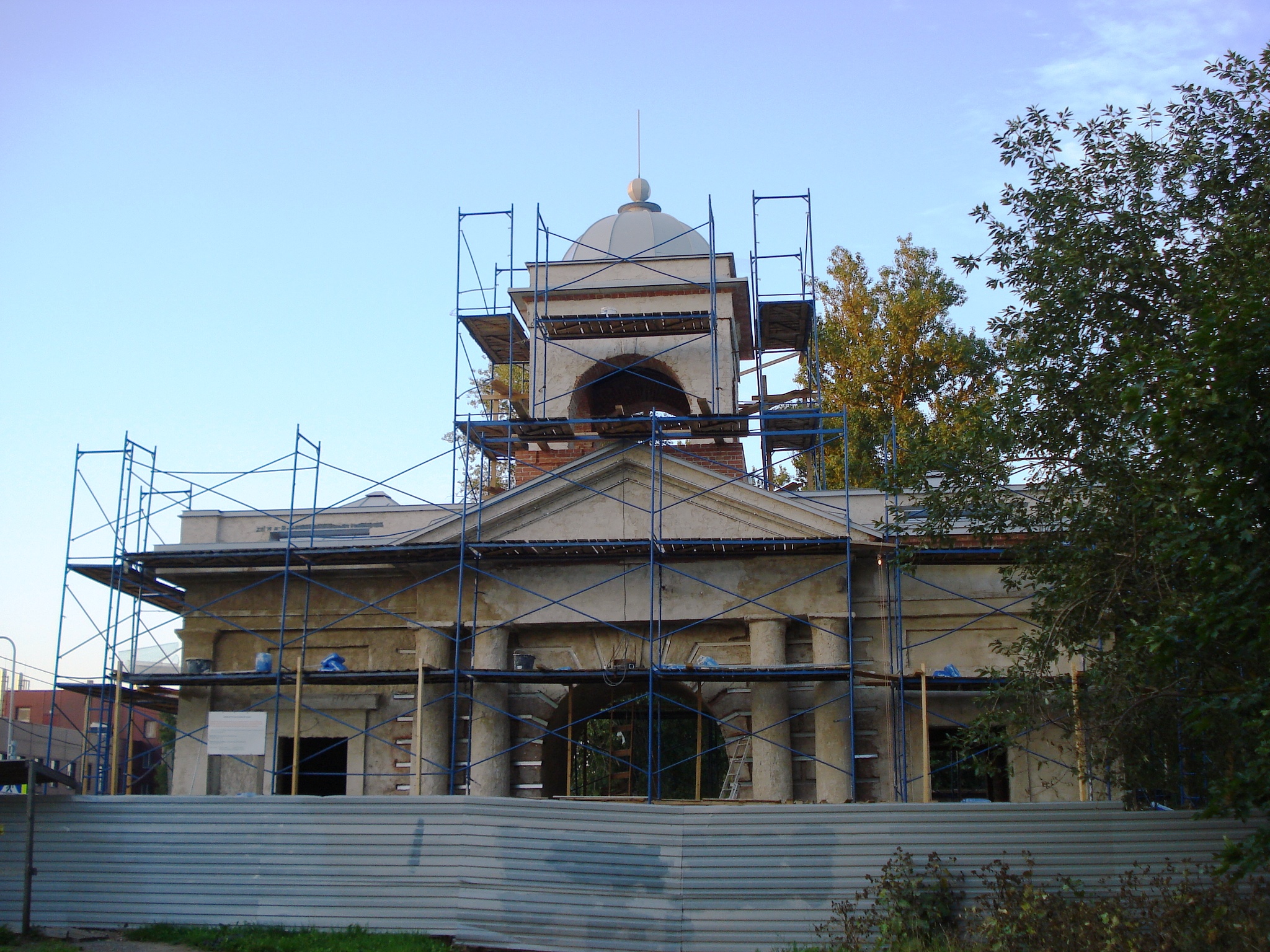
Alexander Gate
1806
Grand Duke of Finland (since 1809), King of Poland (since 1815), the eldest son of Paul I and Maria Fedorovna. In pre-revolutionary official historiography, he was referred to as the Blessed.
The beginning of Alexander I's reign was marked by liberal reforms, many of which were developed and proposed by the Secret Committee and personally by Mikhail Mikhailovich Speransky. In foreign policy, the young sovereign proved to be a talented diplomat, skillfully maneuvering between the rival empires of Great Britain and France. Between 1805 and 1807, Alexander participated in anti-French coalitions, and from 1807 to 1812, he grew closer to France.

The emperor's military campaigns were equally successful: Russia acquired territories and strengthened its positions in relations with Turkey, Persia, and Sweden. The Russian Empire absorbed the lands of Eastern Georgia, Bessarabia, and Finland.

From 1813, Alexander I became the head of the anti-French coalition, and later one of the chairmen of the Congress of Vienna (1814–1815) and the creators of the Holy Alliance.

Alexander I's personality is undoubtedly significant for Russia. His entire life is shrouded in mysteries and various speculations, such as the supposed rise to the throne through patricide and his intentions to atone for this sin. In the last years of his reign, Alexander I indeed spoke of his desire to abdicate the throne and withdraw from worldly affairs. When news of the emperor's death from typhoid fever in Taganrog came in 1825, many did not believe it, suspecting that a double had been buried in his place. According to rumors, Alexander himself had gone to the Urals, where he lived for many years in the guise of a venerable elder named Fyodor Kuzmich.
To the next personality
1799  –1837
Pushkin Alexander Sergeyevich
The greatest poet who had a great influence on the development of Russian and world culture
Alexander is associated with the following objects
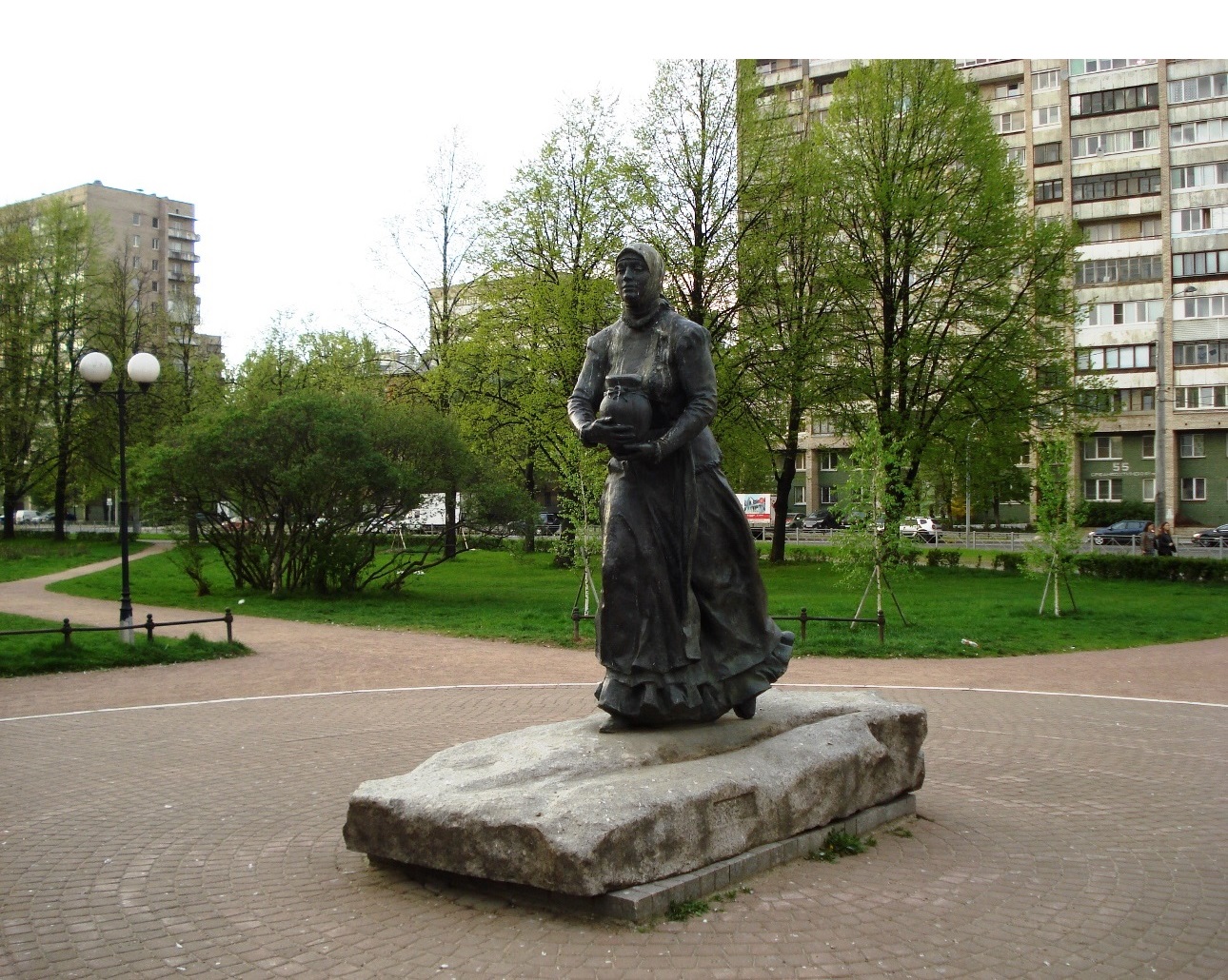
Sculpture “Okhtenka”
2003
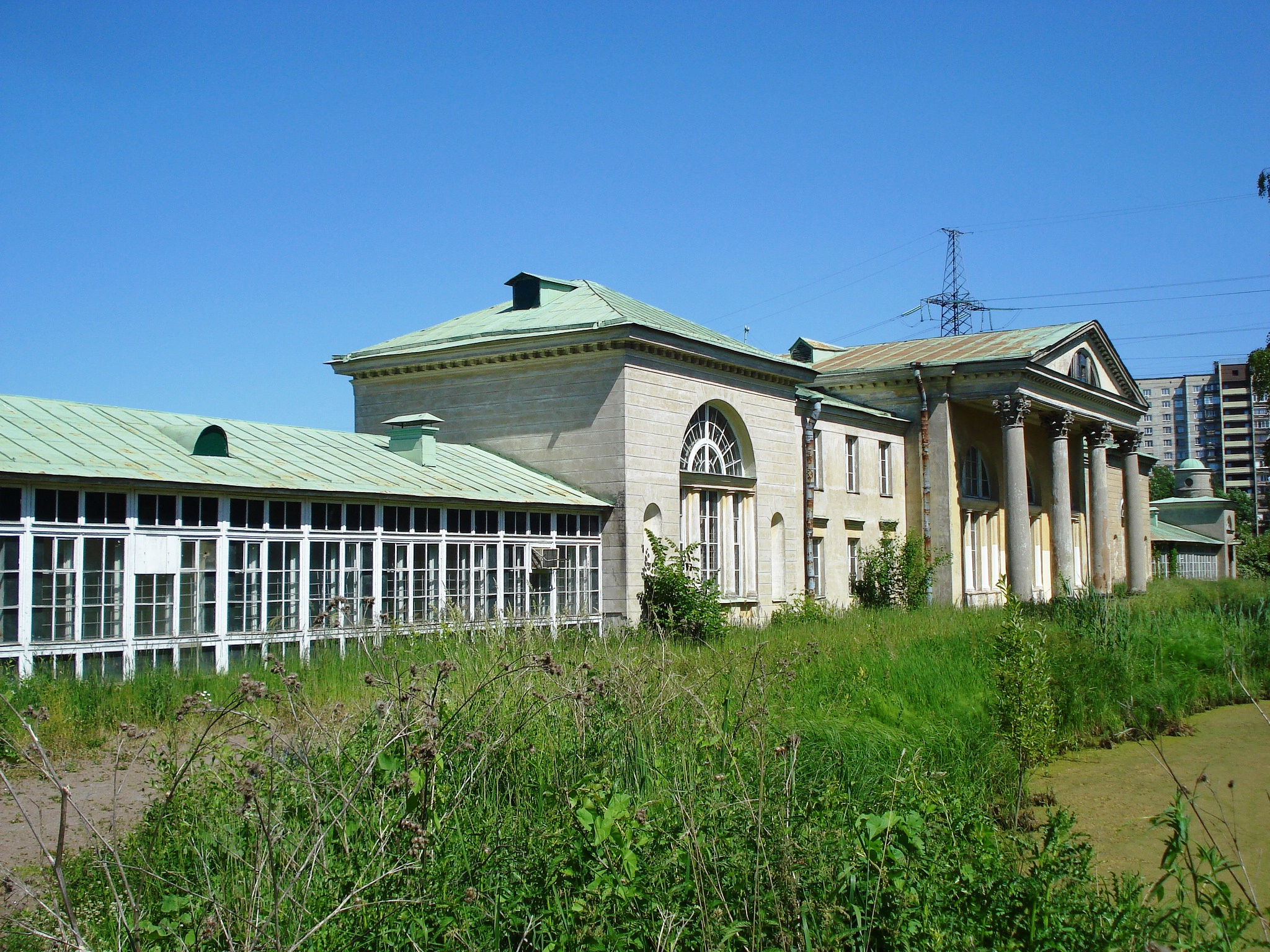
Zhernovka Manor
1796
The greatest poet, who had a significant impact on the development of Russian and world culture. He is the author of "The Bronze Horseman," "The Queen of Spades," "The Belkin Tales," and many other world-famous works. Between 1817 and 1820, he repeatedly traveled to Priyutino, the Olenin estate, through the territory of the modern Krasnogvardeysky district. He likely visited or might have seen, while passing by, the Powder Works and the Zhernovka estate. In his verse novel "Eugene Onegin," he celebrated the milkmaid of Okhta.
He was born on May 26 (June 6), 1799, in Moscow, in the German Quarter. He died on January 29 (February 10), 1837, in St. Petersburg. His father, Sergey Lvovich Pushkin, came from an ancient noble family and was an amateur poet and a well-known wit in society. His mother, Nadezhda Osipovna, née Hannibal, was from the Hannibal family, the "Moor of Peter the Great."

He studied at the Tsarskoye Selo Lyceum, a privileged educational institution for children of noble descent, who were expected to become state officials and high-ranking bureaucrats upon graduation.
Pushkin began writing poetry while still at the Lyceum; during his entrance examination, he read his poems to the elderly Derzhavin, moving him to tears.

Upon graduating from the Lyceum in 1817, Alexander Sergeyevich Pushkin joined the Ministry of Foreign Affairs as a Collegiate Secretary. The bureaucratic job bored the young poet. During this time, he frequently visited the theater and became a member of the literary society "Arzamas" and the theatrical-literary community "The Green Lamp." He wrote "free-thinking" poems, for which he was exiled by Alexander I to the Caucasus, and in 1824 was granted permission to move to his own estate, Mikhailovskoye. In 1825, Pushkin's first collection of poems was published.

In 1831, he married the charming Moscow beauty Natalya Nikolaevna Goncharova. The young couple settled in St. Petersburg. The Pushkins led a high-society life, attending balls and salons. Pushkin's fame grew, but his financial situation increasingly suffered due to the extravagant lifestyle beyond their means.

Due to high-society intrigues and rumors about his wife’s affair with Georges d'Anthès (a French national in Russian military service), a duel took place on January 27 (February 8), 1837, on the Black River, where d'Anthès wounded Pushkin. As a result of the injury, the poet died two days later in his apartment on the Moika River, surrounded by family and doctors.
To the next personality
1948
Budnikov Alexander Grigorievich
He was actively involved in the revival of the Church of St. Elijah the Prophet at the Powder Works.
Alexander is associated with the following objects
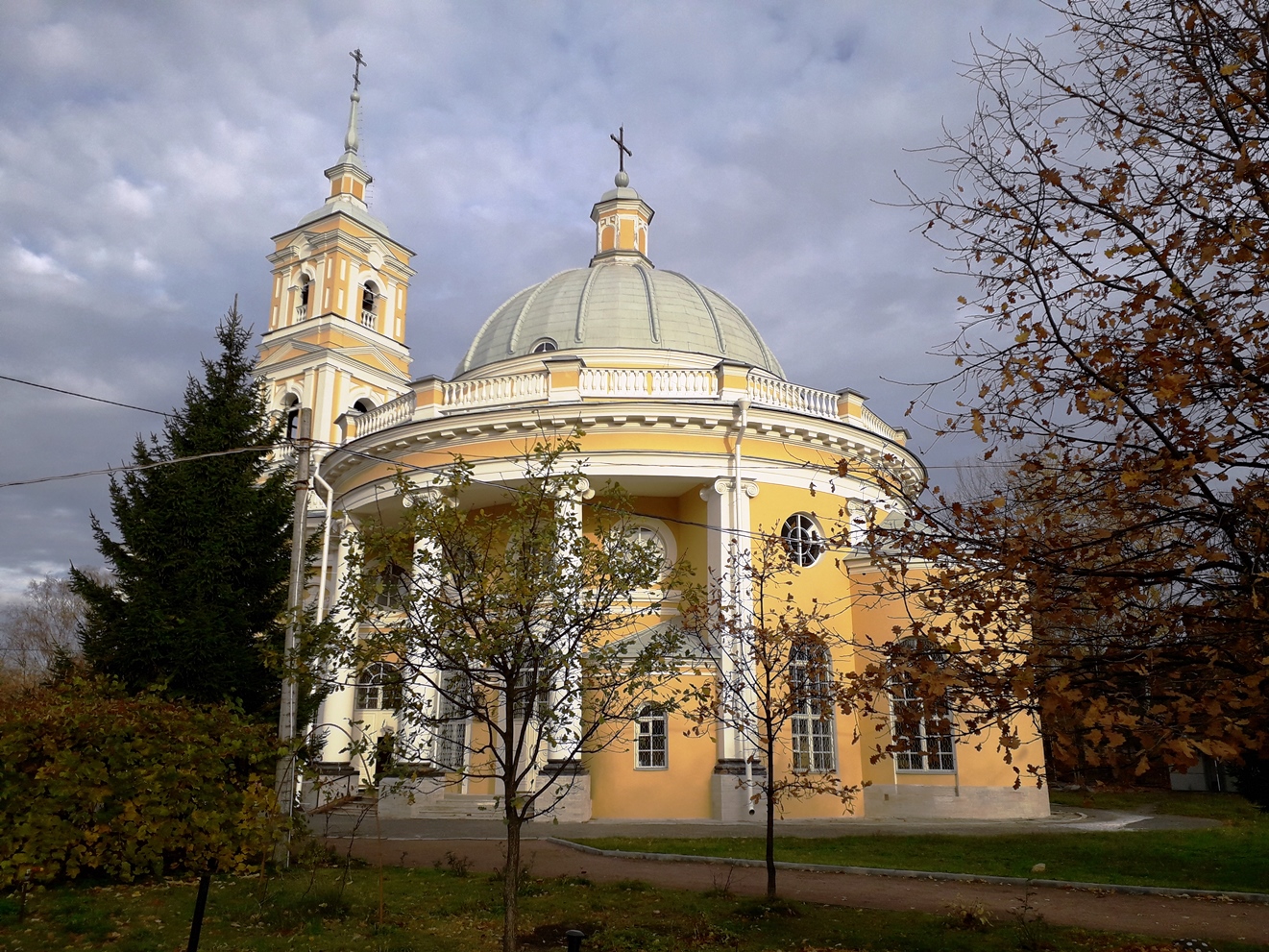
Church of St. Elijah the Prophet
1781
Alexander Grigoryevich Budnikov was born on July 28, 1948, into a working-class family in Leningrad, living in a communal apartment on Telezhnaia Street.
After finishing school in 1964, the future Father Alexander worked for three years and then entered the Leningrad Theological Seminary under the administration of Metropolitan Nikodim (Rotov) of Leningrad Diocese.
In February 1972, Metropolitan Nikodim ordained Reader Alexander as a deacon. On November 4, 1974, the Feast of the Kazan Icon of the Mother of God, Father Alexander was ordained a priest. He then graduated from the Leningrad Theological Academy.
To the next personality
1871 –1939
Apyshkov Vladimir Petrovich
Architect of the Bolsheokhtinsky Bridge and the Finland Railway Bridge
Vladimir is associated with the following objects
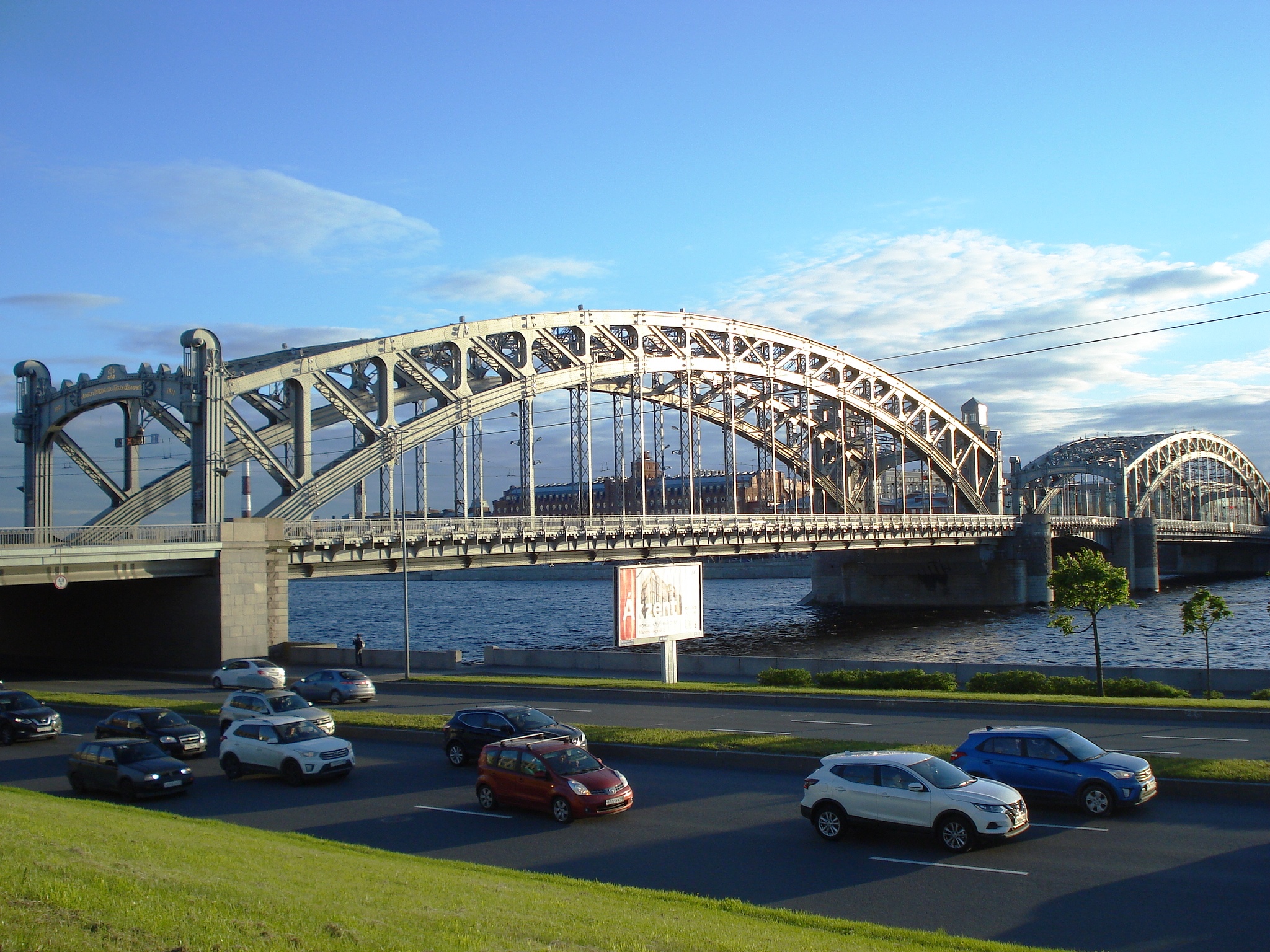
Bolsheokhtinsky Bridge (Emperor Peter the Great Bridge)
1911
Vladimir Petrovich Apyshkov (1871–1939) – an architect and one of the designers of the Bolsheokhtinsky Bridge (Emperor Peter the Great Bridge) and the Finland Railway Bridge across the Neva River. He was also one of the few theorists of Art Nouveau architecture in Russia.
A defender of innovative trends, Vladimir Petrovich Apyshkov significantly influenced the development of architectural thought in the Soviet era with his monograph "Rationalism in Modern Architecture" (1905). Before 1917, there were other writers on architecture, but none could substantiate their theories with such convincing constructions. However, Apyshkov quickly distanced himself from the Art Nouveau style and did not engage in Constructivism, remaining a proponent of classicism until the end of his life. This is evident in the original additions to the ensemble of the Arkhangelskoye estate near Moscow, including the sanatorium buildings of the 1930s.
Among his forward-looking endeavors, aside from the bridge towers, one should also mention the first Chaev mansion on Rentgen Street, 9, known for its bold diagonal layout. The subsequent house for the same client (on Malaya Nevka Embankment, 16) was built in a Neo-Greek style. Classicism is also evident in Apyshkov's designs for the War Department buildings on Parade Street.
To the next personality
1951
Reppo Vladimir Alexandrovich
Architect and co-author of the commemorative monument "Fortress of Nienshants"
Vladimir is associated with the following objects
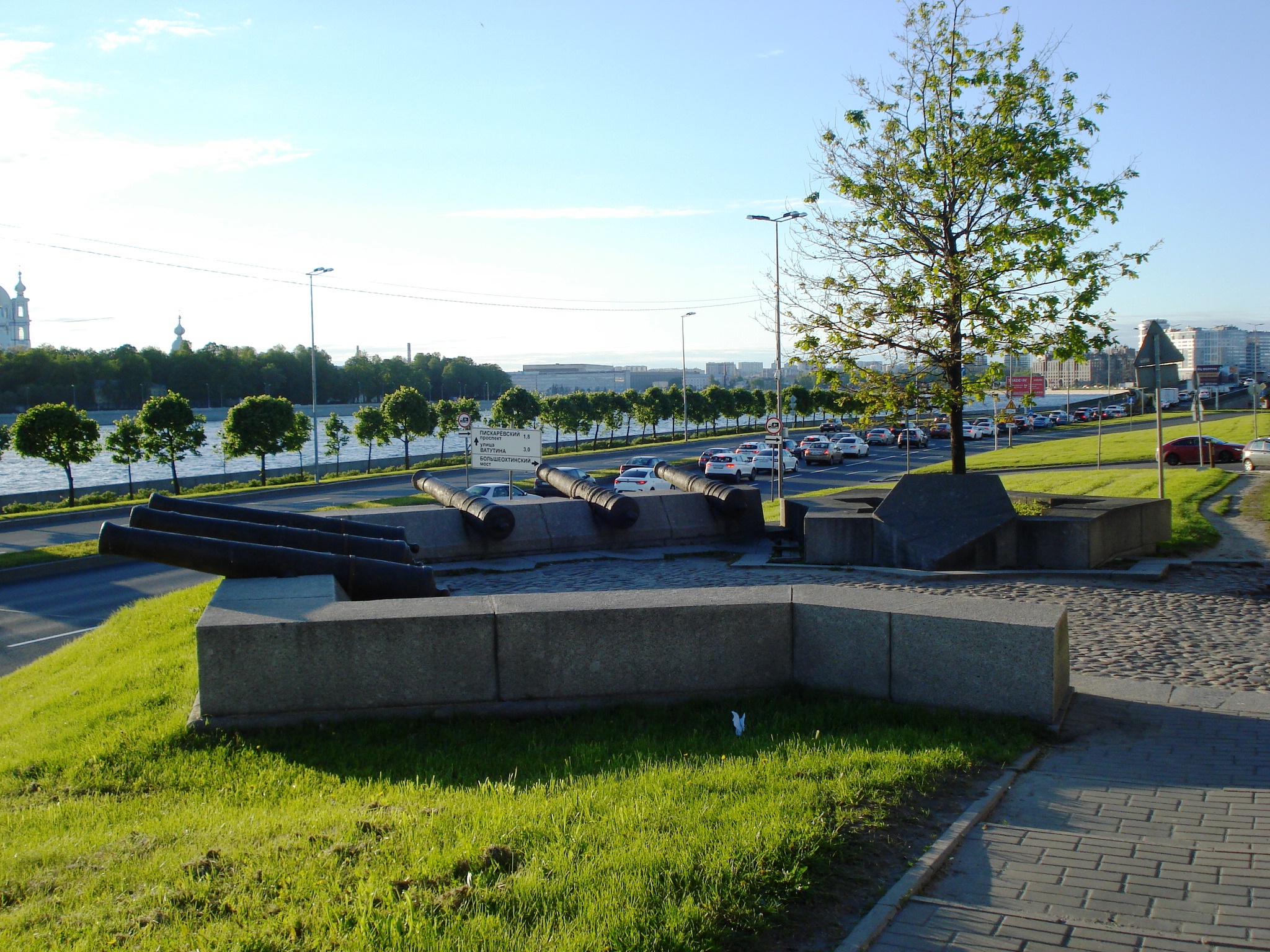
Memorial sign “Nienschanz Fortress”
2000
Vladimir Alexandrovich Reppo was the head and later the general director of an architectural workshop. During the time the workshop was established, many architects combined work in state design organizations with private design projects. V. A. Reppo's Creative Architectural Workshop (TAM) was no exception. Major design projects were undertaken within the walls of Leningrad Institute of Urban Planning (LeniNIIproject), while the personal workshop focused on designing small private houses, apartment interiors, cafés, and renovations for shops, trade pavilions, and garages.
The workshop also participated in competitions and developed conceptual designs that later formed the basis for projects at LeniNIIproject. The workshop had a small team of permanent employees. For each new project, teams of designers, architects, and engineers were assembled.

Some of the most significant projects designed at LeniNIIproject and in Vladimir Reppo's personal creative workshop include the underground vestibule of the "Primorskaya" metro station, the fire station on Dekabristov Street, the memorial to the cruiser "Kirov" on the Marine Embankment of Vasilievsky Island, and the memorial to the "Fortress Nienshants" near the Bolshoi Okhtinsky Bridge. Other notable projects include residential developments around Lake Dolgoe, such as blocks No. 28 and 34-a, and No. 19 and 20 north of Novoselov Street; a residential building at the "Zvezdnaya" metro station (LenSoveta Street, 88); buildings near the "Prospekt Bolshevikov" metro station; structures on Klochkov Lane, 6; buildings on Enthusiasts Avenue, 20–22; a residential building with a music school in block No. 39–40 north of the Mureinsky Stream; and a complex of retail pavilions near the "Ladozhskaya" and "Zvezdnaya" metro stations.
To the next personality
1781 –1842
Beretti Vikentiy Ivanovich
The presumed architect of the Church of St. Nicholas the Wonderworker at the Boloheokhtinsky Cemetery
Vikentiy is associated with the following objects
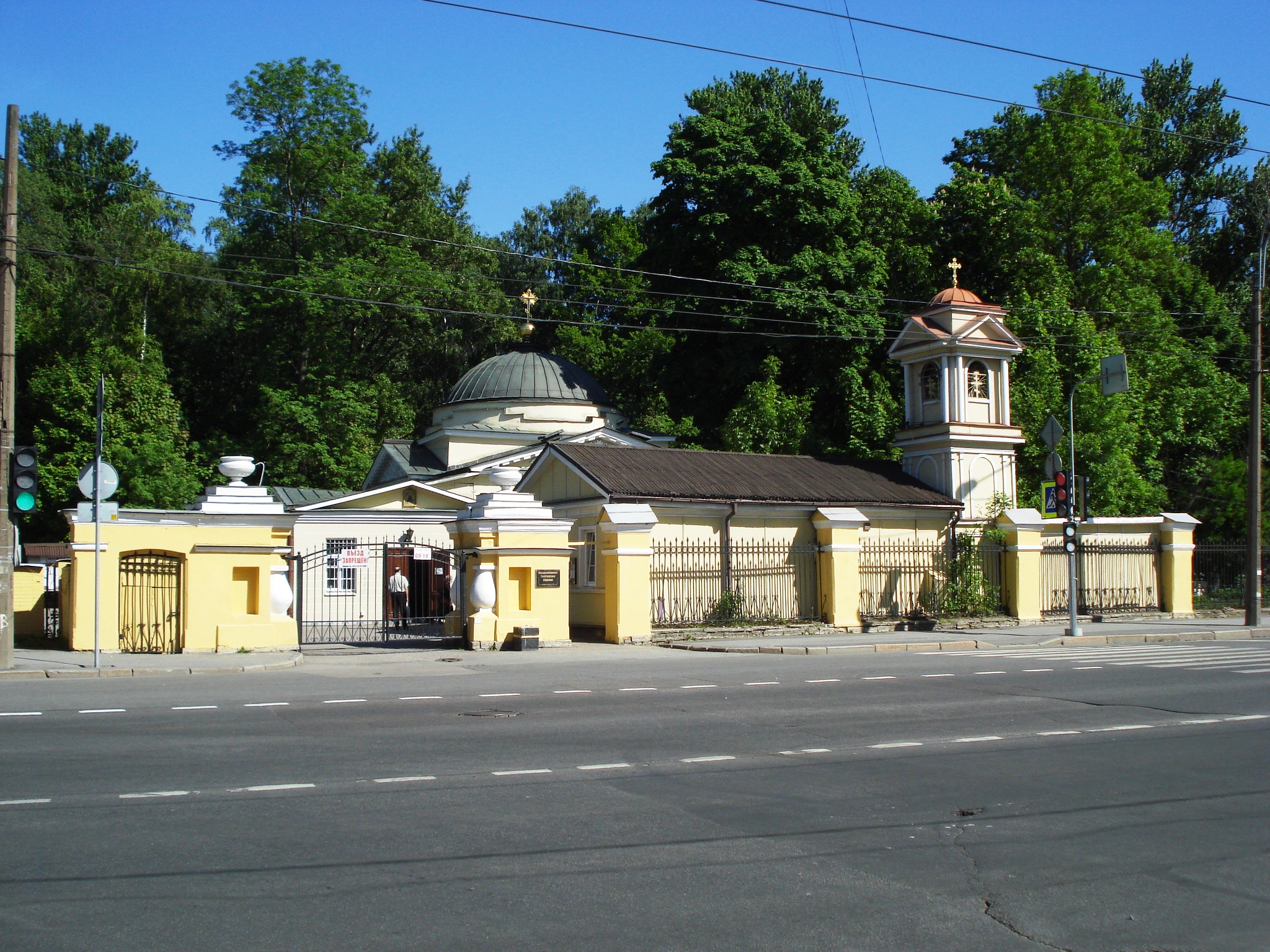
Bolsheokhtinsky Cemetery and the Church of St. Nicholas the Wonderworker
1773
An Italian-born architect who spent his entire life in Russian service and made significant contributions to St. Petersburg and Kyiv.
Vikentiy Ivanovich (Saveliy-Yosif-Antoniy) Beretti was born in Italy in 1781. He was the son of Giovanni Beretti, a professor of mechanics who moved to Russia in the 1780s. In 1798, Vikentiy entered the Imperial Academy of Arts in St. Petersburg, where he studied in the architectural class under the prominent architect Andrey Dmitriyevich Zakharov. He graduated from the Academy in 1804. He assisted Jean-François Thomas de Thomon with the construction of the Exchange Building at the Vasilievsky Island Spit. In 1809, for his design of the Land Cadet Corps, Vikentiy Beretti was awarded the title of Academician of Architecture. Some researchers believe that he was the architect of the Church of St. Nicholas the Wonderworker, built at the Bольшеохтинское Cemetery between 1812 and 1814. From 1825, Vikentiy Ivanovich headed the Committee of City Buildings. There is evidence that Beretti was a member of the committee overseeing the construction of St. Isaac’s Cathedral (Vikentiy Ivanovich himself even developed its competition project). In 1831, he became a professor of architecture at the Academy of Arts.

In the 1830s, Beretti participated in a competition for the best design of the Kyiv University of St. Vladimir. His work received the highest praise. Vikentiy Ivanovich was appointed the chief architect of the university, and in 1837 he was relieved of his duties as professor at the Academy of Arts and transferred to Kyiv. His subsequent activities were associated with this city. His son, Alexander Vikentievich, who also became an architect, assisted him.

Vikentiy Ivanovich passed away in 1842 and was buried at Baikove Cemetery in Kyiv.
To the next personality
1880 –1968
Gromov Alexander Evstafievich
Sculptor-modeler who, together with architect Dushechkina, developed the design of the Triumph Pillars.
Alexander is associated with the following objects
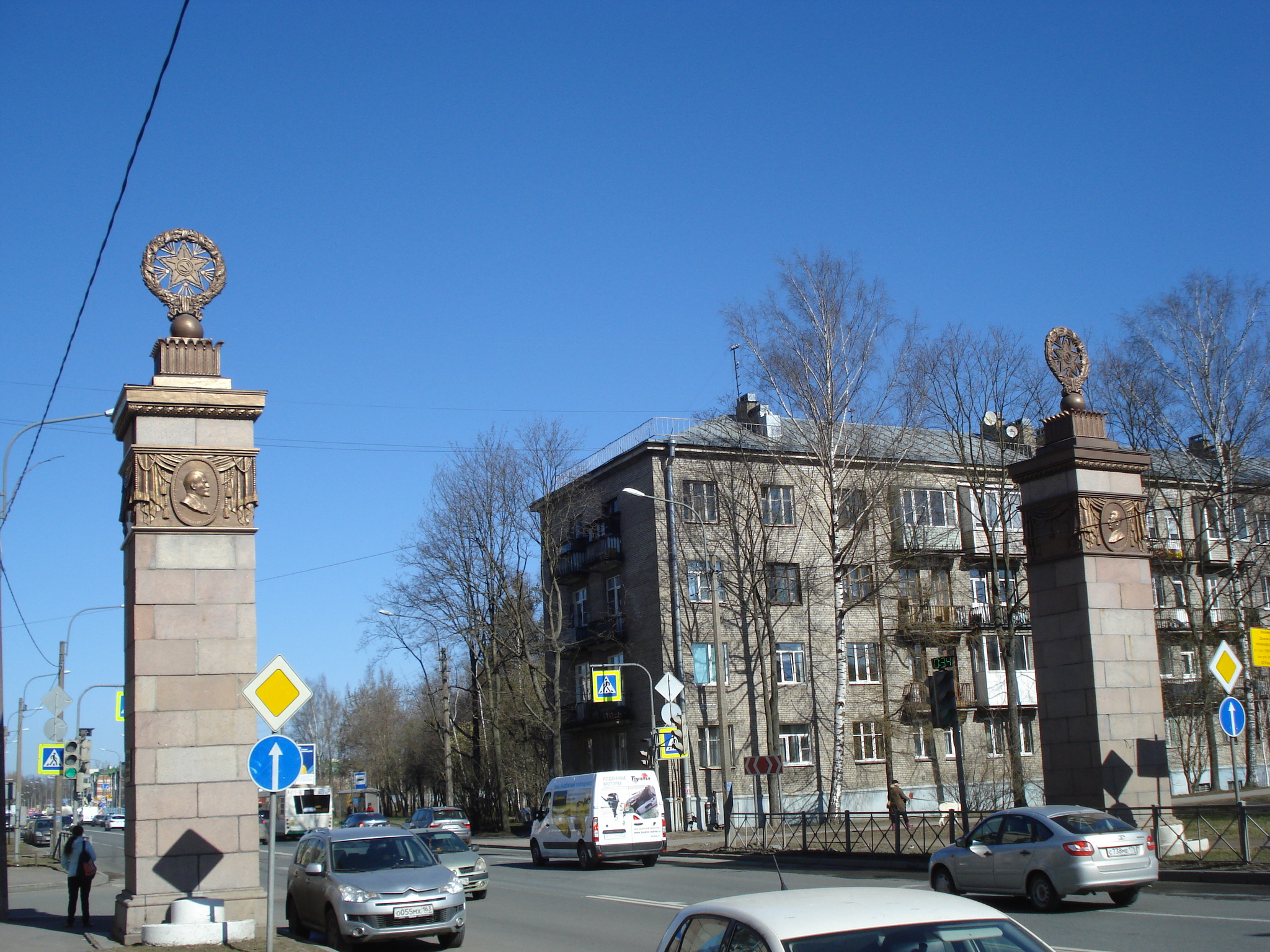
Triumphal pylons (“Pylons on the Powderyards”)
1952
Alexander Evstafyevich Gromov was a sculptor-modeler, master of artistic sculpting, artist-restorer, and woodcarver. Over more than fifty years of professional activity, he completed a large number of important architectural and decorative works. He worked under the guidance and on projects by prominent architects such as I. A. Fomin, A. I. Tamanyan, V. F. Svinyin, E. I. Katonin, E. A. Levinson, and I. I. Fomin.
Born in 1880 into the family of a poor peasant from Tver Province, Alexander Evstafyevich Gromov was one of 13 children. The family sent their children, who had completed primary school, to Petersburg or Moscow to learn a trade or become apprentices. From a young age, Gromov showed a talent for drawing. In the spring of 1893, he was brought to Petersburg and apprenticed for five years in the workshop of Vasily Ivanovich Zhilkin, a modeler.

From 1918 to 1922, he served in the Red Army. In 1924, he entered the molding workshop of the Academy of Fine Arts.
To the next personality
1942
Beider Boris Khaimovich
Architect of the building housing the "Buff" Theater and the "Krasnogvardeysky" Cultural and Leisure Center
Boris is associated with the following objects
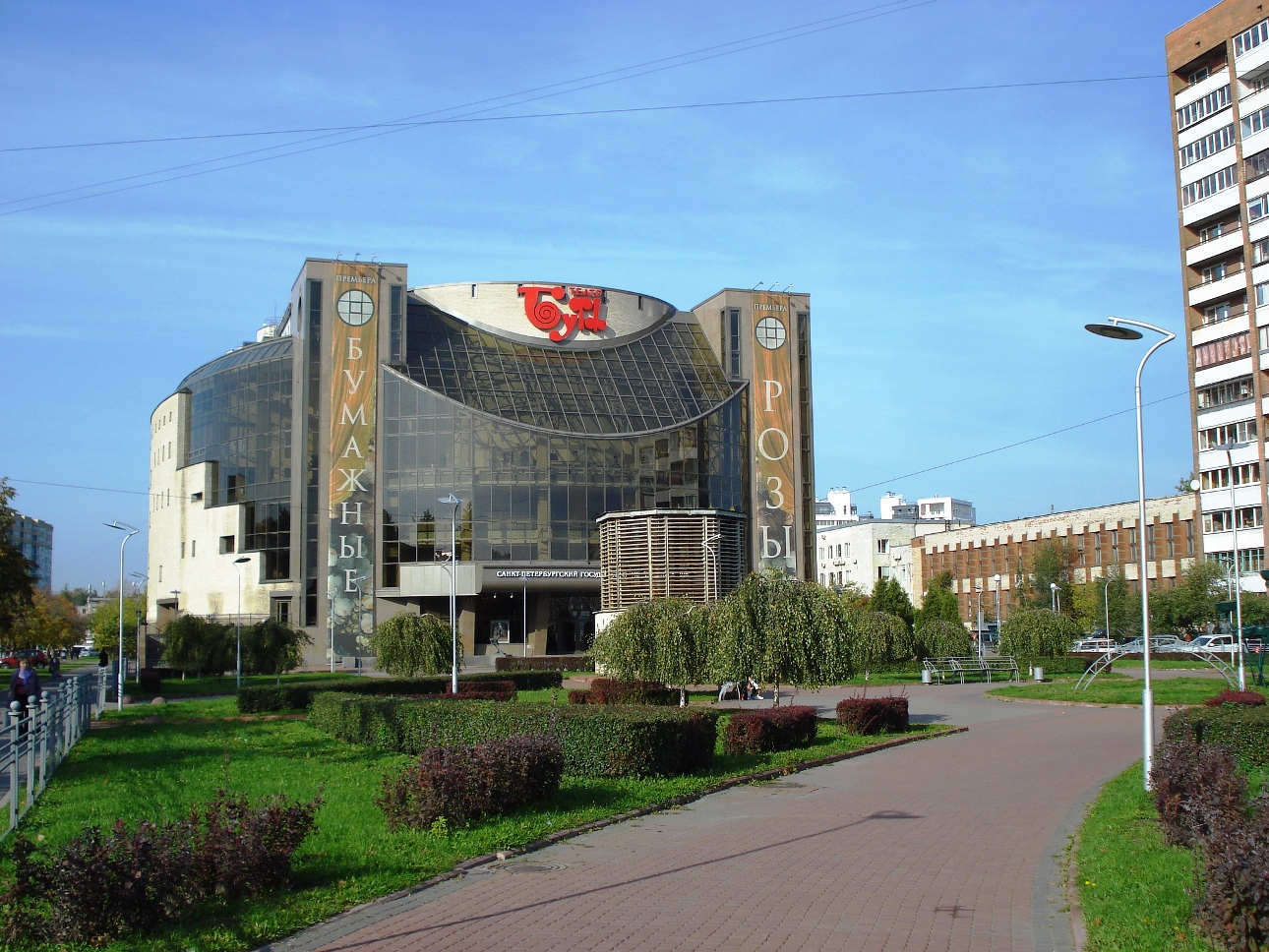
Theater “Buff”
1870
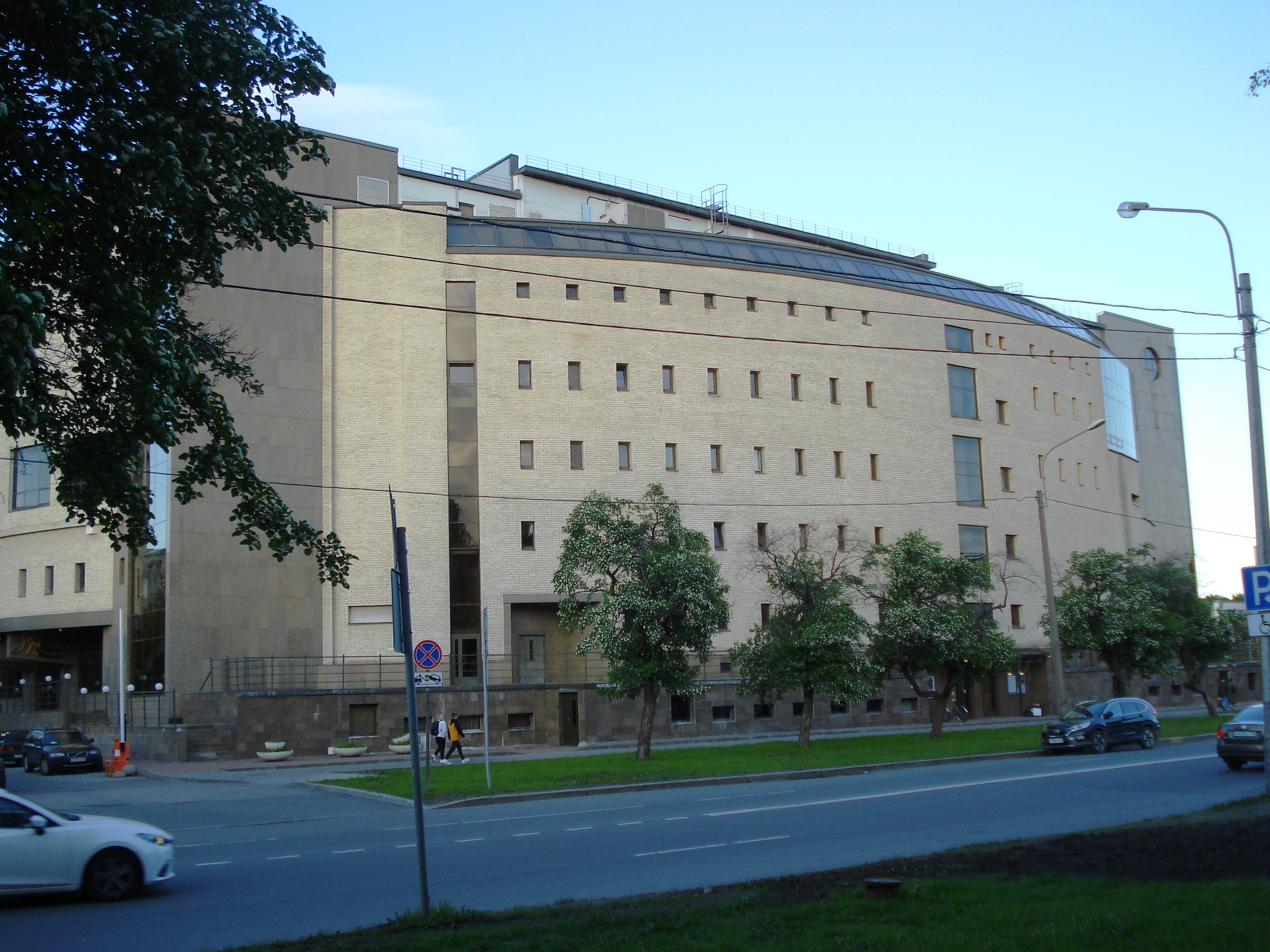
Krasnogvardeysky Cultural Center
2010
Boris Khaimovich Beyder, head of a personal creative architectural studio (since 1991); member of the Union of Architects of Russia (since 1973); member of the Union of Artists of Russia (since 1986).
Born on October 19, 1942. In 1971, he graduated from the Faculty of Architecture at the I. E. Repin Institute of Painting, Sculpture, and Architecture. After graduating from the institute, he worked as the chief architect of Surgut, then as an architect at the Leningrad Research Institute of Experimental and Project Design (LenZNIIP). From 1976 to 1991, he worked as an architect at the Art Fund of the Union of Artists.
To the next personality
1929 –2007
Levenkov Alexander Danilovich
Architect, author of the memorial plaque "Regulator"
Alexander is associated with the following objects
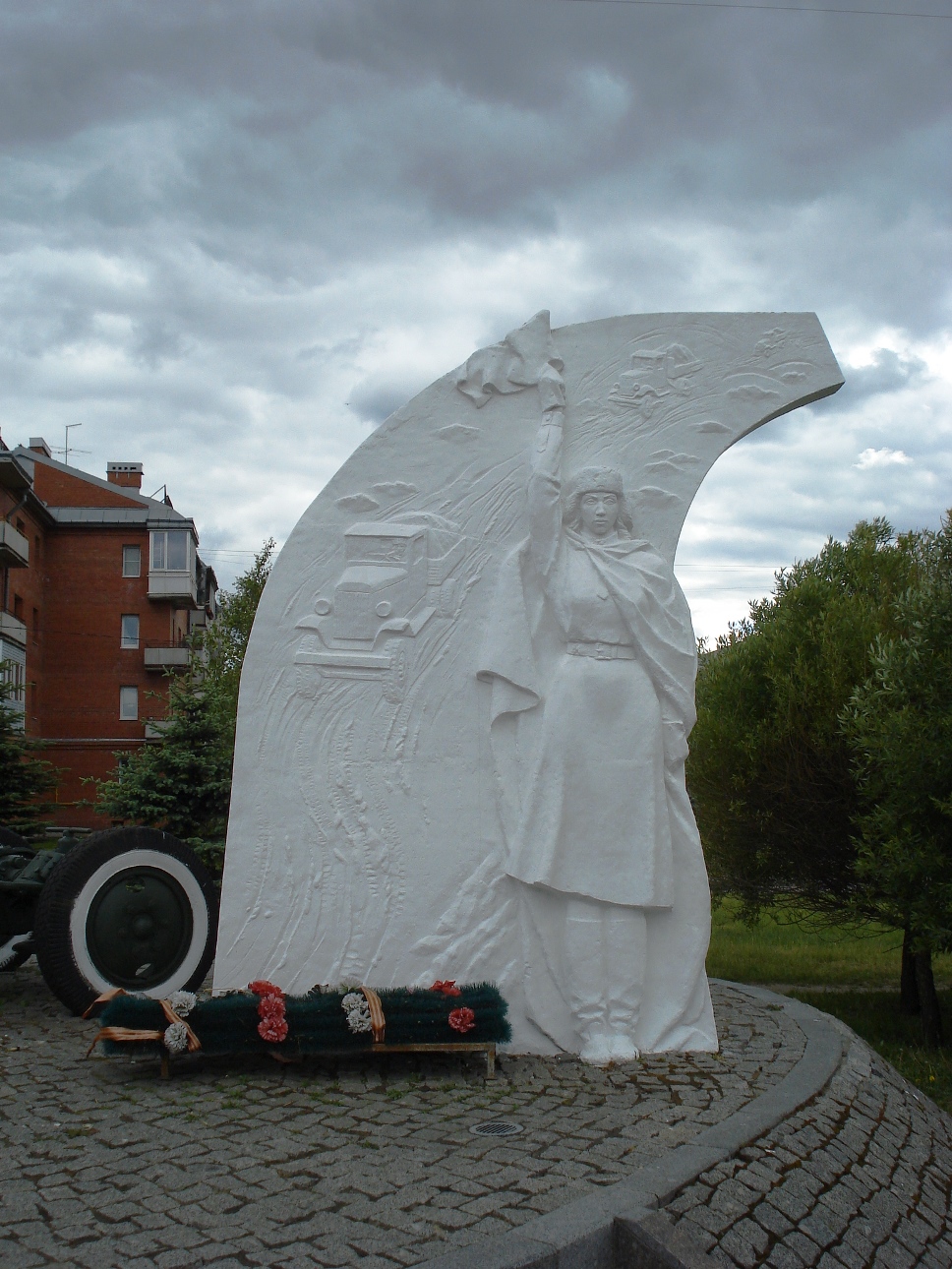
“Regulator” commemorative sign
1985
Alexander Danilovich Levenkov (1929–2007) graduated from the Faculty of Architecture of the Academy of Arts in 1958 and worked as an architect at "Lenproject" for thirty years. He designed about thirty monuments along the Green Belt of Glory. Among them are the memorials "Baltic Wings," "Flower of Life," "Katyusha," and "Old Section of the Road of Life." Alexander Danilovich was involved in the reconstruction of the brotherly military burial site in Rumbolovo and other monuments.
Architect Alexander Danilovich Levenkov was deeply concerned about the fate of his works and, along with sculptor Yevgeny Vasilyevich Chinyakov, regularly visited the monuments he created along the Road of Life to check their condition. The last time Levenkov visited the "Flower of Life" was in April 2007. Two years after his death, in July 2009, a memorial plaque was installed at the "Flower of Life" monument, next to a birch tree that he had once planted himself, in his memory.
To the next personality
Blockade temple
Local residents began to call the Church of the Assumption of the Blessed Virgin Mary in Maloohtinsky Park, located on the territory of the former Maloohtinsky Orthodox Cemetery, the Siege Church. During the hard blockade years here they buried those who died of hunger and cold. In fact, the Blockade Church is the only religious monument in St. Petersburg to the victims of the blockade.
More About the Object
To the Next Object
Bolsheokhtinsky Cemetery and the Church of St. Nicholas the Wonderworker
Bolsheokhtinskoye Cemetery is one of the most famous cemeteries in St. Petersburg. It is the largest necropolis located within the city limits. The cemetery is located between Metallistov Avenue, Degtyarev Street, Energetikov Avenue, Bolshaya Porokhovskaya, Boksitogorskaya and Partizanskaya Streets. Its area is about 70 hectares. The history of Bolsheokhtinsky cemetery began in the XVIII century. Since then, several churches were built on its territory. Only one - St. Nicholas the Wonderworker - has survived to this day.
More About the Object
To the Next Object
Malookhtinsky Old Believers' Cemetery
Although this small cemetery is one of the oldest in St. Petersburg and is located not somewhere on the outskirts, but within a 10-15 minute walk from Novocherkasskaya metro station, not all citizens are aware of its existence. However, in recent years Maloohtinskoye has acquired a peculiar reputation and has become a place of pilgrimage for occultists, esotericists and other lovers of mysticism. However, the real history of this cemetery is probably more fascinating than all the myths and legends it is laden with.
More About the Object
To the Next Object
Porokhovskoye cemetery and the monument to the Porokhodols
Porokhovskoye cemetery is not a particularly famous or prestigious cemetery. There are not many burials of famous people in it. And it lies away from the main excursion routes of St. Petersburg and its environs. But it is one of the few “professional” cemeteries in our city. Artillerymen and gunpowder makers were buried there, including those who died in explosions at the Okhta gunpowder factory. In addition, the cemetery is located in a hilly area, which makes it very picturesque. In general, it is worth taking a day off to visit it.
More About the Object
To the Next Object
Church of St. Elijah the Prophet
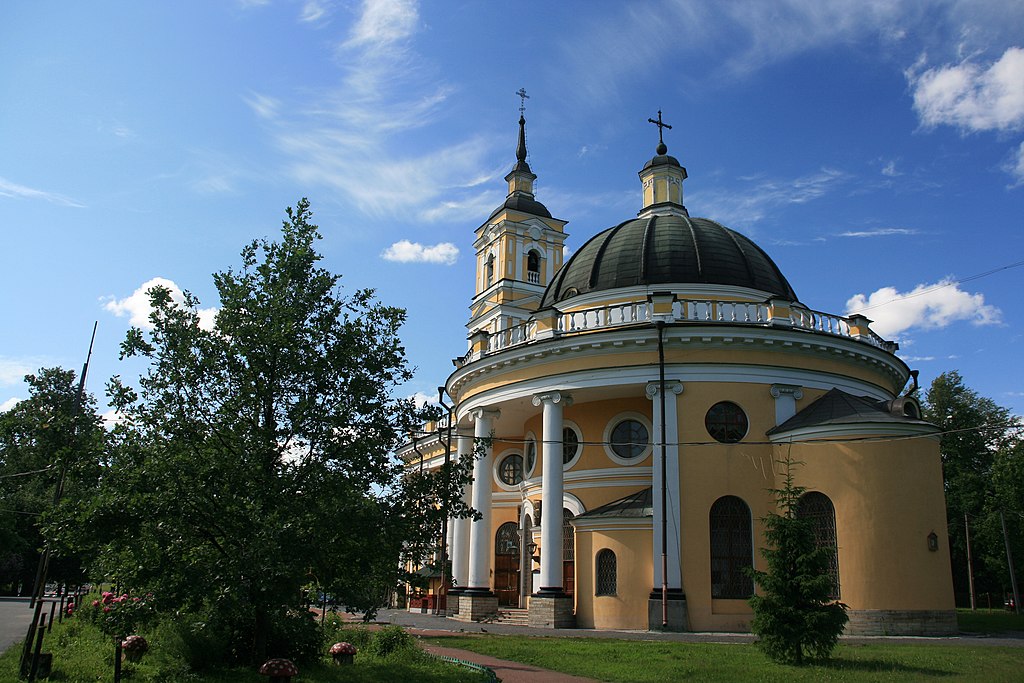
St. Elijah's Church is actually a temple complex that includes two churches built at different times and having different dedication. These are the church-rotunda of the Holy Prophet Elijah (1781-1785) and the church of the Holy Prince Alexander Nevsky with a bell tower (1805-1806). The history of the Church of St. Elijah the Prophet is closely connected with the history of the Okhta Gunpowder Factory, founded by Peter the Great in 1715. The first wooden chapel in the workers' settlement appeared in 1717, it was consecrated in honor of Elijah the Prophet, the patron saint of all professions connected with fire. However, the temple complex, which we see today, was finally formed only in the late 1870s, during the last major reconstruction under the direction of architect N. V. Lissopatsky.
More About the Object
To the Next Object
Bolsheokhtinsky Bridge (Emperor Peter the Great Bridge)
The Bolsheokhtinsky Bridge, opened as the Emperor Peter the Great Bridge, connects the central part of St. Petersburg and Okhta, with which the prehistory of our great city is connected. The bridge spans the Neva River, from Sinopskaya Embankment to Maloochtinskaya Embankment. It is about 335-339 meters long and up to 26.5 meters wide.
More About the Object
To the Next Object
Alexander Nevsky Bridge
The main symbol of the modern Krasnogvardeysky District is the Bolsheokhtinsky Bridge. This statement can be disputed only by the residents of the Central District, who have no right to consider this bridge a symbol of their administrative-territorial unit. After all, let us not forget that it was erected on the initiative of the city, and not Okhta, which in the early XX century such an enterprise was completely beyond the power of the city. One way or another, but the emblem of the Krasnogvardeysky District Administration today depicts an unmistakable recognizable silhouette of the Bolsheokhtinsky Bridge drawbridge span. It also adorns the emblem of our Central Library.

The Alexander Nevsky Bridge, located upstream, does not claim to be the district symbol. It is not spoiled by attention at all. It is not included in the lists of city sights, obligatory to visit. There are no crowds of tourists wandering over it, clicking cameras and bombarding guides with questions. Wedding photo shoots are not organized on this bridge, newlyweds in beautiful outfits do not hang their locks and then throw the keys from them into the Neva River.

Not having an impressive architectural appearance, the Alexander Nevsky Bridge is in the shadow of its older neighbor, which the public is used to admiring. Meanwhile, the history and design of this bridge, built in the 1960s, is quite interesting. And the appearance of this complex engineering structure, if you think about it, deserves high praise.
More About the Object
To the Next Object
Alexander Gate
The Alexander Gate, built in the 1800s, was the pride of the Okhta Gunpowder Factory. It welcomed the most important persons, and the bell in its turret announced the beginning and end of the working day at the plant. Recognized as a monument of regional significance, this gate is one of the main architectural decorations of the Powder Plant.
More About the Object
To the Next Object
Barracks of the Novocherkassk Regiment
The red brick barracks are a tangible reminder of the Novocherkassk Regiment, which was associated with Malaya Okhta for forty years and became a true friend of the Okhtians. These barracks survived the regiment for which they were built. They survived the collapse of two empires, non-core use, neglect and recognition as a monument of regional importance. Will they survive the upcoming revitalization?
More About the Object
To the Next Object
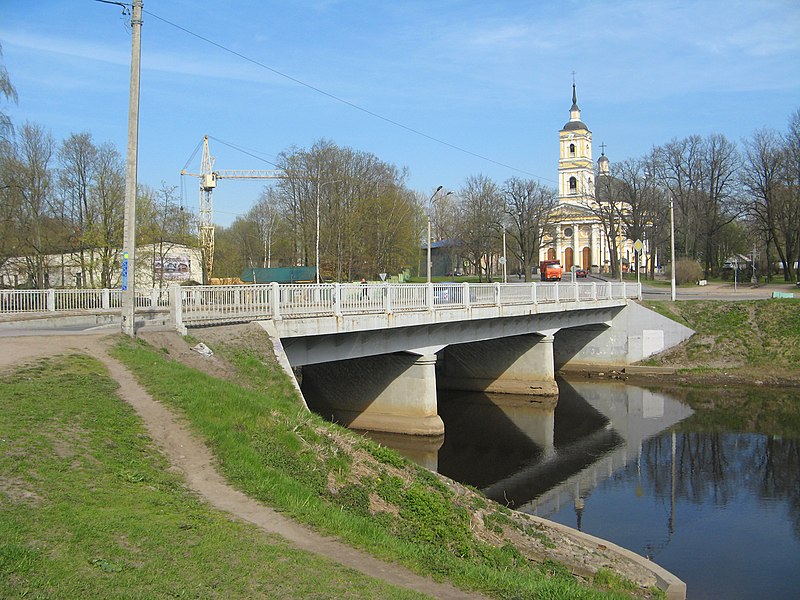
Komarovsky Bridge
It is highly probable that the ancestor of all the bridges of modern St. Petersburg was built here, near the mouth of the Okhta, and long before the foundation of our city. Perhaps the bridge over the Ohta was built back in 1300-1301, when the Swedish fortress Landskrona existed on the Okhta promontory, or in the XVI century, when the Russian (Russian-Izhora) trading settlement Nevskoe estuary (Nevsky Gorodok) was formed at the confluence of the Ohta into the Neva. And in the XVII century, when the Swedes took possession of the Prinevsky lands again, the bridge appeared here for sure. It was wooden and connected the fortress of Nyenshants with the town of Nien.

The present Komarovsky Bridge continues the Bolsheokhtinsky Bridge across a narrow strip of land (Okhtinsky cape), connecting the Small and Big Okhta. At first glance, it is purely utilitarian, practically devoid of decoration and aesthetically not too remarkable. When talking about this workman's bridge, the most common epithets used are “modest”, “discreet” and even “inconspicuous”.
More About the Object
To the Next Object
Merchant Ivanov's mansion
Behind a five-storey Art Nouveau house on the corner of Bolshaya Porokhovskaya Street and Sredneokhtinsky Prospekt there is a three-storey mansion with the initials “PI” and the year of construction - “1901”. This mansion is known as “The House with a Peacock” or “Pavlivanovka”. Like the neighboring profitable house, it belonged to the merchant Pavel Ivanovich Ivanov. The mansion is famous for its fireplaces, one of which is decorated with the figure of a peacock, as well as the grand staircase made of diabase.
More About the Object
To the Next Object
Zhernovka Manor
The estate flourished in the last third of the 18th century, when it became the property of the Georgian noble Donaurov family. Under their rule, large-scale construction was carried out here according to the project by Giacomo Quarenghi. For its time, Zhernovka was a typical summer pleasure estate; its complex included the main building, a pavilion, a pier, a large landscape park, outbuildings and gates.
More About the Object
To the Next Object
Utkina dacha
It's hard to believe, but not far from Ladozhskaya metro station, surrounded by modern glass and concrete buildings, you can see a rare monument of classicist architecture. Near the place where the Okkerville River flows into the Okhta River there is an old manor house known to St. Petersburg residents as Utkina Dacha. The manor house was built at the end of the XVIII century, the courtyard service building - in 1820-1830s. During its existence, the estate has changed many owners, but its name retains the surname of the latter - Utkins.
More About the Object
To the Next Object
Kushelyov-Bezborodko Estate
This is one of the oldest estates in St. Petersburg. The founder of the city on the Neva River himself used to visit here. Before St. Petersburg was founded, it was the estate of the commandant of Nyenshants. Peter I gave these lands to his medical officer, who discovered here springs of ferruginous mineral water, known to contemporaries as Polyustrovskie.

In the era of Catherine II, the vast estate of the all-powerful Chancellor Alexander Andreevich Bezborodko spread here. It was the time of the estate's heyday: a vast landscaped park with ponds was laid out at that time, and by the Neva River the estate complex ended with a pier for guests and a grotto leading to the house.
More About the Object
To the Next Object
Novocherkasskaya metro station
“Novocherkasskaya” is one of two stations of the St. Petersburg Metro located in the Krasnogvardeysky District. Its artistic design is dedicated to the Red Guard, and for almost seven years it was called “Krasnogvardeyskaya”. Since 1992, the station has been bearing its current name. At the end of 2020, it celebrated its 35th anniversary.
More About the Object
To the Next Object
Ladozhsky railway station complex
Ladozhsky is the most modern and the only transit railway station in St. Petersburg. It is designed as an intelligent building, which makes it one of the most advanced in Europe. The opening of the Ladozhsky station complex took place in the year of the 300th anniversary of our city.
More About the Object
To the Next Object
Kvadrat Youth House
The Youth House (aka Youth Center) “Kvadrat” is a convincing proof that a public institution can be popular. And popular with a very demanding public, which, in fact, is the youth. For its short history “Kvadrat” has managed to acquire the reputation of a fashionable place where you can spend your free time in an interesting and useful way. And among those who come here, it is increasingly possible to meet young people from other districts of our city.
More About the Object
To the Next Object
Maloohtinsky Park
For the residents of Krasnogvardeysky District, Maloohtinsky Park, located between the Neva and Okhta, is one of the favorite recreation places. It was opened in 1960, but the first garden on this territory was laid out in the late 19th century. In addition to the usual trees, shrubs and flower beds, Maloohtinsky Park boasts its own permanent exhibition of urban sculpture.
More About the Object
To the Next Object
Krasnogvardeysky Cultural Center
Having started its work in 2010, the Krasnogvardeysky Cultural and Leisure Center quickly gained popularity and became a point of attraction for the creative natures of our district. Today, thousands of people are engaged in the Center and its branches: preschoolers and schoolchildren, university and college students, middle-aged men and women, pensioners. They draw and sculpt, compose music and write poetry, put on plays and reconstruct historical costumes, dance and sing. Not a single festive event in the Krasnogvardeisky district can be held without the artists of the Krasnogvardeisky Cultural Center.
More About the Object
To the Next Object
Theater “Buff”
Located on the site of the former Okhta movie theater. Opened in 2010. The first building in Leningrad/St. Petersburg designed and built specifically for a theater in 40 years (the previous one was the building of the TYuZ). The Buffa project belongs to architect Boris Beider and is the result of a creative compromise between the original color scheme in intense red tones and the wishes of the theater's artistic director Isaac Shtokbant to “make everything a little more modest”.
More About the Object
To the Next Object
Polyustrovsky Park
There are no monuments of the distant past or century-old trees planted by Peter the Great. Polyustrovsky Park is young and attractive to people of different generations. This is a great place for those who want to hide from the bustle without leaving the city. Here the residents of not only Polyustrov and its surroundings, but also other districts of St. Petersburg spend their time with pleasure.
More About the Object
To the Next Object
Triumphal pylons (“Pylons on the Powderyards”)
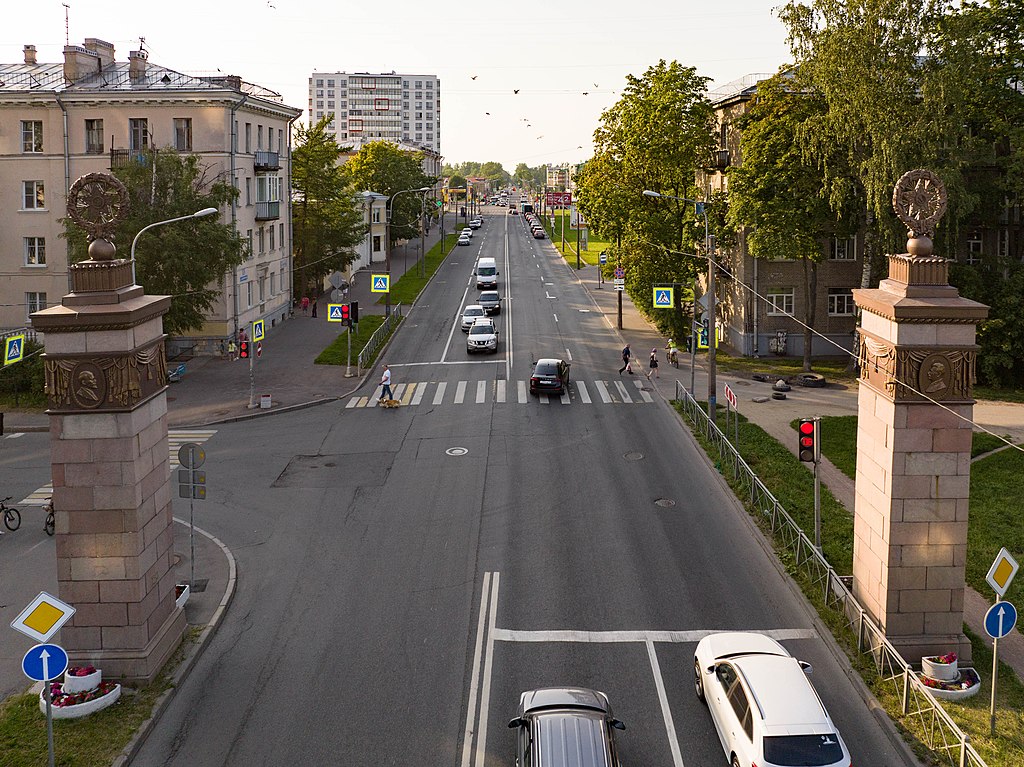
To see an artistic depiction of Stalin in modern St. Petersburg, you will have to try hard. Such images, except for those kept in museums, can be counted on your fingers. Two of them are placed on the Triumphal pylons at the T-junction of Kommuna Street and Otechestvennaya Street. Here Joseph Vissarionovich is accompanied by his senior party comrade Vladimir Lenin.
More About the Object
To the Next Object
Monument to the Children of Beslan
In the garden of the Malokhtinsky Church of the Assumption of the Blessed Virgin Mary there are several memorials worthy of attention. But the strongest impression is made by the one that is installed almost right next to the church fence, just to the right of the gate. It does not allow anyone to pass by indifferently. As if an unknown force draws the eye to it, and the terrible pictures of the tragedy instantly come to mind. This monument is dedicated to the children who died as a result of the terrorist attack in Beslan in 2004.
More About the Object
To the Next Object
Monument to Peter the Great
It was here, where the Okhta flows into the Neva River, that shipwrights settled by the decree of Peter the Great and built the ships that made the glory of the Russian Navy. The monument to Peter the Great was erected in 1911 in the square of the later (in the 1930s) demolished Church of the Descent of the Holy Spirit.
More About the Object
To the Next Object
Monument to Konstantin Grot
The history of the monument to Konstantin Grot is inextricably linked with the history of the school for the blind, which he founded in 1881. Subsequently, this school grew into the famous Alexander-Maria School, located on Aptekarsky Island. Its successor - boarding school No. 1 for blind and visually impaired children - operates on Malaya Okhta, under the watchful eye of the bronze Grotto....
More About the Object
To the Next Object
Memorial sign “Nienschanz Fortress”
A memorial sign with six ancient cannons installed on the Okhta promontory refers to the pre-St. Petersburg period in the history of the Prinevsky lands. It shatters the myth that St. Petersburg emerged on deserted swamps. There were plenty of swamps here, but contrary to popular belief, there were also plenty of settlements. One of them was the Swedish town of Nien, which grew up at the fortress of Nyenshants in the 17th century.
More About the Object
To the Next Object
“Regulator” commemorative sign
Girls-regulators stood all along the Road of Life: on its land part and on the ice of Lake Ladoga. Day and night, in all weathers, under enemy fire, they showed the way to the vehicles. This memorial sign is dedicated to their immortal feat.
More About the Object
To the Next Object
Sculpture “Okhtenka”
In 2003, the monument “Okhtanka” was unveiled near the Neva Garden, not far from the intersection of Sredneokhtinsky Prospekt and Revolutionary Highway. The sculptors embodied in bronze the image of the Okhta resident, familiar from Pushkin's lines: “The Okhtanka is hurrying with a jug, / The morning snow is crunching under her”.
More About the Object
To the Next Object
Monument to Carl Faberge
The world has many monuments to spiritual teachers, political figures, military leaders, writers, and scientists. But a monument to a jeweler is a great rarity. It is all the more pleasant that the monument to one of the most famous representatives of this delicate profession is installed in Krasnogvardeysky district, not far from Ladozhskaya metro station. By the way, the place for the monument to Carl Faberge was not chosen by chance. A real jewelry cluster has existed near the modern intersection of Zanevsky Prospekt and Energetikov Prospekt for many years.
More About the Object
To the Next Object
Rzhev Artillery Range
The Rzhevsky training ground houses numerous remarkable monuments of Russia's military engineering history. On this vast territory, hidden from prying eyes by dense forests and high fences, buildings from the 19th century and unique artillery pieces from the 20th century still stand. Unfortunately, the training ground is gradually falling into disrepair.
More About the Object
To the Next Object
Ohtinsky Cape
Over its long history, Okhtinsky Cape has been the scene of Russian-Swedish confrontation, a major shipbuilding base, and the subject of heated debates between adherents of different views on the development of St. Petersburg. Some advocated preserving the Cape's archaeological monuments and turning it into a museum. Others supported the idea of erecting a miracle of modern architecture here. The miracle eventually grew in another part of the city, but the future of “St. Petersburg Troy” is still very vague. Especially since the owners of this land do not seem to have abandoned their plans for its development. So it turns out that the most peaceful time in the biography of Cape Okhta was when its northern part was, in fact, a large industrial zone.

More About the Object
To the Next Object
Peter the Great Hospital

The hospital, whose name commemorates the founder of St. Petersburg, is a unique medical institution. It is unlikely that any analogs can be found anywhere else in the world. The ceremony for laying the foundation of this hospital took place in 1910 in the presence of members of the imperial family.


More About the Object
To the Next Object
Ilyinskaya Sloboda
Ilyinskaya Sloboda is a settlement that emerged in the first third of the 18th century at the Okhta gunpowder factory founded by Peter the Great. The sloboda was located between the present-day Revolution highway, Kommuna street, Irinovsky avenue and Potapova street. The word “sloboda” comes from the word “freedom”: craftsmen who moved to work at the Gunpowder Factory were exempted from other taxes. And the name “Ilyinskaya” sloboda was given to the church of St. Elijah the Prophet, the patron saint of gunpowder masters.
More About the Object
To the Next Object
Library and Art Residence SHKAF

In 2021, a remarkable space officially opened in the Krasnogvardeysky District – the SHKAF Library and Art Residency. This new creative cluster, established on the site of the Piskaryovsky Library and Cultural Center, offers opportunities for creativity in several fields: literature, architecture, design, and performing arts. It provides a platform for both residents and visitors of the district, including professionals in art and science, to realize their creative ideas.


More About the Object
To the Next Object
"Rzhevskaya" Library
The "Rzhevskaya" Library is a high-tech cultural and informational center that opens new opportunities for literary enlightenment, local history exploration, and the development of scientific, educational, business, and creative initiatives. It is a space where the future becomes the present, and the past inspires and unites generations.
More About the Object
To the Next Object
Library "Porokhovskaya"
"Porokhovskaya" is a family-oriented library where reading brings together adults and children. However, it’s not just about books! The library offers a wide range of events suitable for all ages, including preschoolers and seniors. The program includes art exhibitions, street festivals, intellectual games for adults, and educational activities for children. At "Porokhovskaya," you can even attend a real puppet show!
More About the Object
To the Next Object
Library "Ohtinskaya"
Would you like to escape the gray routine and everyday concerns? Mentally transport yourself to the shores of the Mediterranean Sea? Remember the summer, the caress of the sun's rays, the gentle whisper of the waves, and the warm sand underfoot? Would you like to turn the pages of your favorite book in the relaxing atmosphere of a secluded beach? Then you simply must become a reader at the "Ohtinskaya" library!
More About the Object
To the Next Object
Malookhtinskaya Library
The "Malookhtinskaya" Library was established in May 1945 in honor of the victory in the Great Patriotic War. Throughout these years, the library's team has carefully preserved its history and views its special mission as maintaining historical memory. Today, it is a hub for residents of the Krasnogvardeysky district, a winner and laureate of many professional and city competitions. It also offers all the conditions for comfortable work, relaxation, and self-development: a wide range of informational and reference services, specially equipped computer workstations, and a rich schedule of free cultural and educational events.
More About the Object
To the Next Object
The "KUB" Library

"KUB" stands for Creative Universal Library. It is the first library in Novaya Okhta and the youngest (as of September 2019) in the Centralized Library System of the Krasnogvardeysky District. Moreover, it is a multifunctional cultural cluster that focuses not only on books and reading but also on education, art, technology, information exchange, leisure, and creativity. Additionally, "KUB" aims to become an important community center where local residents can come with their initiatives.


More About the Object
To the Next Object
Library Communication Center "Sovremennik"
The Library Communication Center "Sovremennik" is a vibrant public space filled with initiatives from local residents. By merging a children's and an adult library, "Sovremennik" has become a place where visitors of different ages and interests enjoy coming together. The Library Communication Center "Sovremennik" serves as both a "Neighborhood Hub" and a "home base" in the area, as well as a space for collaborative practices shaped by reading, communication, and modern technologies.
More About the Object
To the Next Object
1 из 28
59.989005, 30.431477
Alexander-Oshevenskoye farmstead
In the area of the T-junction of Piskaryovsky Prospekt and Volgo-Donsky Prospekt.

In all likelihood, the appearance of this farmstead can be considered as another evidence of the amazing generosity of people towards the Russian Orthodox Church. In “Shrines of St. Petersburg” by Victor Vasilievich Antonov and Alexander Valerievich Kobak and in the electronic version of the encyclopedia “St. Petersburg” it is reported that the plot in Piskaryovka was donated (either to the monastery or to the farmstead itself) by a certain G. I. Bychkov. This is indirectly confirmed by documents kept in the Central State Historical Archive of St. Petersburg (see fond 224, inventory 1, file 3641). They read “On the levy of land tax on the real estate of G. I. Puchkov, Alexander-Osheven Monastery on Bolshaya Okhta at Belyaevsky Lane, 13 and 13-a in the Polyustrovsky section”, which also gives an idea of the location of the farmstead. The mentioned “Belyaevsky per.” - is the present Volgo-Donskoy Prospekt. And the mismatch - and at the same time consonance - of the surnames can be explained by a trivial typo/error.

In the "Sacred Sites of St. Petersburg" and in the electronic version of the "Encyclopedia of St. Petersburg," it is stated that in the autumn of 1903, hieromonk Ioakim submitted a request to the diocesan authorities for the construction of a wooden parish church on the site in question. The authorities deemed the site too small for a church and rejected the request. Instead of a church, a wooden chapel for 300 people was consecrated on November 28, 1904. Its design was developed by architect Nikolai Nikolaevich Yeremeev. The electronic version of the "Encyclopedia of St. Petersburg" specifically notes that it was not allowed to convert this chapel into a church. The chapel was first consecrated on July 27, 1907, and then again, after an expansion that made it resemble a small church, on July 20, 1909. In the "Sacred Sites of St. Petersburg," the electronic version of the "Encyclopedia of St. Petersburg," and in Natalia Pavlovna Stolbova's "Atlas of the Krasnogvardeysky District," the chapel is dedicated to St. Panteleimon the Great Martyr and Healer. (In the guidebook "Churches of Petersburg," Panteleimon "shares" the chapel, whose dedication is not clearly defined, with St. Alexander Oshchevensky, the founder of the Assumption Monastery.)

A completely different—and, in light of the above description, less convincing—version of events is presented in Sergey Sergeyevich Shulz's "Churches of St. Petersburg." According to him, the Alexander-Oshchevensky Assumption Male Monastery of the Olonets and Petrozavodsk Diocese "acquired land near Emperor Peter the Great Avenue <renamed Piskarevsky Avenue in January 1944>, on the border of the Polyustrovsky and Piskarevsky districts of the city" in 1913. On this land, a parish was established, and a church (or chapel) was built in 1913–1914 according to a design by architect Nikolai Nikolaevich Yeremeev. It was consecrated in 1914 in the name of St. Alexander Oshchevensky.

The information we have about the final years of the "Piskarevsky" parish of the Alexander-Oshchevensky Monastery is mostly consistent. Before the October Revolution, hieromonk Ioakim, already familiar to us, served at the chapel of the parish, as noted in the "Sacred Sites of St. Petersburg" and the electronic version of the "Encyclopedia of St. Petersburg." The local residents greatly loved this chapel, although no one lived at the parish itself from 1919. The chapel continued to serve as a parish church for another ten years. Shulz writes that from December 1927 until its closure on January 21, 1931, the "church belonged to the Josephites," and in the subsequent 1930s it "was used as a storage room for the workers' dormitory of the sugar warehouse and dairy farm." Later, the former parish buildings were demolished.

Additionally, it should be noted that in the late 1920s, the rector of this parish church was Priest Nikolai Fyodorovich Prozorov, a Josephite who was executed on August 21, 1930, and canonized by the Russian Orthodox Church Abroad in 1981.

To the next waypoint
2 из 28
59.958803, 30.411272
First adjusting station
Intersection of Bolsheokhtinsky Prospekt and Revolution highway at house No. 41
At this now busy intersection in the winter of 1941 was the first regulation post of the Rzhevka blockade corridor. This was the name of the 7-kilometer “city” section of the track from Bolshaya Okhta to Rzhevka station.

Through Bolshaya Okhta, the evacuation of Leningraders was carried out. There was another route—through the Finland Station, from where trains to Rzhevka ran along a railway line. When tram service ceased, reaching evacuation points and continuing to Rzhevka became much more difficult. Since 1925, the central part of Leningrad had been connected to the distant outskirts by a tram line, part of which still exists today. This line ran along Bolshaya Porokhovskaya Street. Upon arriving at Bolshaya Okhta, evacuees had to wait for a vehicle or other means of transport. At that time, other transport consisted of horses. Weak, injured horses and those who had already been to the front, were wounded, and returned to the besieged city from the front lines, were put into service in the city.

At the intersection of Bolshoi Okhtinsky Avenue, a nearly straight stretch of road began from the checkpoint, lined with wooden houses. Imagine a straight cobblestone pavement extending into the distance. In winter, it turned into a snowy highway, along which in 1941, people with small children's sleds trudged. On these sleds, they carried belongings, canisters of water, and the weak from hunger—both adults and children who could not yet walk. Along the route, trucks, kicking up snowstorms, sped towards Rzhevka carrying supplies for those maintaining the Road of Life. In summer, Revolution Highway became busier as people went to Rzhevka for vegetables. On the return trip, men and women with bags on their backs could often be seen, looking like large black ants.

Through checkpoint No. 1 at Bolshaya Okhta, not only women with children heading to the mainland but also defenders of the city, being transferred to Ladoga, passed.

Today, in the building on the corner, constructed in the 1950s, is the Raid 2.0 Search Movement Museum, which houses unique exhibits—personal items of the found heroes, letters, weapons, and communication devices.

To the next waypoint
3 из 28
59.959050, 30.416036
Route of the Rzhev corridor
Intersection of Sredneokhtinsky Prospekt and Revolution highway
The main evacuation point on Bolshaya Okhta during the blockade was located at the intersection of Sredneokhtinsky Prospekt and Bolshaya Porokhovskaya Street. This location was explained by the fact that the streetcar line to Rzhevka was located there, and the narrow-gauge Irinovskaya railroad, built in the late 19th century by Baron Korf, also ran there. The Irinovskaya railroad carried goods from Ladoga and Rzhevka station. Back small open platforms carried materials for the construction of the Road of Life, weapons, ammunition and other goods for the defenders of Ladoga. Part of the transport with civilians was sent this way. This road was rather bad and longer, that's why semi-trucks and carts more often went to Bolsheokhtinsky and from there to the Revolution highway, which was much more adapted for transportation of goods and people. The fact is that the highway appeared here in the pre-Petrine era and connected the Swedish city of Nien and brick factories on the river Okhta, later transformed by Peter into the Okhta gunpowder factory. Since the royalty often visited the factory until the October Revolution, the road was kept in order and constantly repaired. In Soviet times, this highway also had an important transportation value, but during the blockade period it became the main road to the Road of Life.

From Middle Okhtinsky Avenue, there was no direct access here; it ended before reaching the Revolution Highway, as evidenced by the 1940 aerial photographs taken by German pilots. Those who did not wait for the vehicle and went on foot had to take a detour through a checkpoint. Desperate Leningraders, who had lost their belongings due to bombings and could not obtain work permits, traveled on foot through the Rzhevsky Corridor. Some of them then continued on foot along the Road of Life, stopping in villages, trying to find some sustenance for themselves and their children. Not everyone reached Lake Ladoga, but even those who did faced the problem of inadequate transportation. In the early years of the Great Patriotic War, almost all Soviet industry was redirected to military production, with factories being moved beyond the Ural Mountains to Siberia, but it took a lot of time to reestablish the production of machinery and vehicles, and time was in short supply.

Here, on this section of the Rzhevsky Corridor, one could still hear the “terrifying music” of war—the sound of city sirens warning of the next air raid, the all-clear signal, followed by silence. Sirens turned into a distant, muffled background noise, while the approaching aircraft were signaled by a different, low, guttural sound. This was the signal to hide anywhere possible and wait, listening to the barking of anti-aircraft guns and the staccato bursts of machine guns.

Waiting in winter, literally buried in snow since there were almost no other shelters on this remote road, was cold and frightening. Not everyone could then get up to continue forward. Along the entire route from Bolshaya Okhta to Rzhevka, from Rzhevka to Ladoga, and even on the ice of Lake Ladoga, frozen people were found who had sought salvation but never reached the mainland.

Yet others got up and continued, walking in silence, occasionally speaking only when necessary to conserve strength. Each crunching step echoed across the white expanse of collective farm fields. Not even the barking of dogs could be heard—by the winter of 1941–1942, there were almost none left. Only occasionally did a bird sing somewhere in the distance, reminding them that life persisted, that it was invincible.


To the next waypoint
4 из 28
59.958829, 30.427544
Ladoga Cinema and Muravyevka Village
Revolution highway, 31
The movie theater with the eloquent name “Ladoga” is located on the place where the village of Muravyevka appeared approximately in the 1920s. Of course, the settlement itself already existed here, but it received a new name after the October Revolution. Mentions of this village are contained in the plan of the Red Army's defensive lines, as well as in administrative documents. After 1945, the village ceased to exist, and the Bolshaya Okhta began to be built up.

Directly across from the modern cinema stood a small two-story wooden building—the house of the Vvedensky Convent's courtyard. The courtyard itself was closed in the 1930s, and the chapel was demolished. This building housed a dormitory, most of whose residents worked at local factories. The dormitory was adjacent to undeveloped land, but it was unsuitable for agriculture because it was heavily flooded in the spring. This area is now occupied by Polyustrovsky Park. There was also a small mineral water factory with an open tap for collecting water. Locals came to this tap to collect the healing water. Leningraders heading to Rzhevka filled small flasks and bottles with the water. They stood silently in line, as talking was a waste of precious energy.

The taste of the cold, slightly briny water with a hint of bitterness was invigorating and seemed to give strength. Exhausted by bombings and the constant anticipation of attacks, people fell into apathy, losing sensitivity and almost failing to react to their surroundings. After just a sip of Polyustrovsky water, it was as if they came alive from the sharp, unique sensation in their mouths.

Another taste that accompanied those heading to the mainland was that of snow. Eating snow was dangerous, but in desperation and hunger, people were ready to turn anything into food. They carried blockade bread made from wallpaper paste, cake crumbs, and various "fillers," such as cellulose and ground grass, known as durand cakes. Some were fortunate enough to find whole sugar loaves—an incredible luxury! For a child, it was a joy and a dream to lick such a loaf, feeling its rough, even prickly surface and sweetness with their tongue.

Leaving behind Bolshaya Okhta, Leningraders ventured beyond the city, into the fields, where ahead, rare cottages loomed darkly, turning into dim lights in the midst of the black ocean of darkness at night.

To the next waypoint
5 из 28
59.960688, 30.442499
Five roadside cabins
Intersection of Revolution highway and Energetikov Avenue
In the early 1940s, there was no Energetikov Avenue yet. The Revolutionary Highway was a straight road, along which stretched a huge snowy expanse. A snowstorm was blowing, and only the darkened tracks showed the direction.

To the left of the highway, where the monumental building of the Central Bank of the Russian Federation banking complex and the long facade of the Central Research Institute of Materials building are located today, there were several wooden one-story houses. These houses survived the war and were preserved until the late 1970s. During the blockade, people continued to live in these houses, with semi-trucks passing by their windows, wagons with firewood and food. And also through the fogged windows they watched groups of people, doomed to endure and hoping for distant Kobona, slowly walking along the roadside to Rzhevka.

The beginning of the Rzhevka blockade corridor symbolically repeated the beginning of the hardest period in the history of Leningrad. Frost, cold, silence, snowstorm, scattered pockets of life, and suddenly, in this silence, a cheerful marching song is heard - a group of soldiers is coming. And in this song you can hear the faith in victory.

To the next waypoint
6 из 28
59.960881, 30.447786
The “Daily Bread” stele
In front of house 72 on Revolution highway
The first of the four steles of the Rzhev blockade corridor is located right behind the branch of the Oktyabrskaya (formerly Nikolayevskaya Railway). The first bas-relief on the end of the stele shows the viewer a figure in a cloak with an automatic rifle, however, it is not a soldier at the post, and not a warrior-defender of Leningrad, but an unnamed driver of a semi-truck.

Anyone who found themselves at the wheel on the Road of Life had to not only deliver the invaluable cargo to the city and bring people to the mainland, but also fend off the enemy while on the move. On some of the trucks, light machine guns were mounted in the cargo area to fire at German planes over Lake Ladoga. In the spring, fearless drivers would drive across the thawing ice with the door open, literally standing on the running board, ready to jump out at any moment if the truck began to sink. Even then, the driver could not abandon the cargo or, even more so, the people. He would pull sacks of flour and other provisions from the icy water and rescue exhausted women, children, and the elderly from the ice holes.

The author of the Rzhevsky Corridor of the Blockade monument, architect, sculptor, and artist Vladimir Sergeyevich Lukyanov, was born in Leningrad in 1945. His mother worked as a teacher at a school on Rubinstein Street at the start of the blockade, then went into evacuation, returning immediately after the lifting of the siege. The architect's father developed weapons for the front, working at the State Institute of Applied Chemistry (GIPKh). One can imagine the responsibility and joy with which Vladimir Sergeyevich approached the creation of these stelae. They were installed in 1985 to mark the 40th anniversary of the Great Victory. That same year, an obelisk was erected in the center of Vosstaniya Square, becoming the centerpiece and axis of the Green Belt of Glory, designed by Lukyanov—a symbol of the city risen from the ruins.

The complex of stelae known as the Rzhevsky Corridor of the Blockade was named "Daily Bread" because bread was the most precious cargo of the trucks, symbolizing both the tragedy and the salvation of Blockade Leningrad. Daily bread gives strength for labor, faith, and heroism, and the strength to endure any trial.


To the next waypoint
7 из 28
59.960647, 30.460057
Prerevolutionary town
Revolution highway, 65
In the 1940s there was a small town here, built before the revolution. The houses stood until the second half of the 1970s, when Rzhevka-Porokhovye began to be actively built up. At the same time, in the early 1980s, Industrial Avenue appeared. House No. 41 (later 57) was especially notable among these houses - it became the location for the movie “The Eldest Son”. According to the plot of the movie, two guys missed the train, and then decided to settle down for the night by deception. Nikolai Karachentsov's character introduced himself as the lost eldest son of Sarafanov, played by Yevgeny Leonov.

In the plot of the movie, two guys missed the train, and then decided to settle down for the night by deceit. Nikolai Karachentsov's character introduced himself as the lost eldest son of Sarafanov, played by Yevgeny Leonov.

This touching comedy tells about a completely different time, but then, in the blockade years such sudden relatives appeared often. Children left without parents found their aunts, great-aunts and other relatives, appearing on the doorstep without warning. Not all such stories ended well, many were not happy about the new mouths and refused to accept an orphan who was assigned to an orphanage. But there were also cases when a complete stranger's child was taken into the family.

It was a war. A time when all the deepest qualities of man, both good and bad came to the surface, vividly unfolding against the background of destroyed houses and barricades. And many discovered in themselves incredible strength, fortitude and fortitude to go all the way to the end.

Today in this place nothing reminds of the small town, of the hardships of the blockade life, of the path that Leningraders passed in this struggle with the enemy and with themselves.

To the next waypoint
8 из 28
59.961264, 30.489112
Skovorodskoe farmstead
In the neighborhood of house 58 on Kommuna Street.
The history of the subvillage of the Skovorodsky St. Michael's Monastery of the Novgorod Diocese on Porokhovye began with a gift, or, to be more precise, with a donation from local residents. As he writes in his book “Okhta. The oldest suburb of St. Petersburg“ Natalia Pavlovna Stolbova writes, ‘a plot of land along the Irinovskaya railroad was donated to the monastery by a community of breadfarmers from the Polyustrovskaya volost ’with the indispensable condition that a monastery church be built on it”. As far as it is known, the monastery received this plot at its disposal in 1897. It was supposed that here will be erected a farmstead with a church of the Holy Prince Alexander Nevsky - in memory of Alexander II, Tsar-Liberator.
Natalia Stolbova found out that on May 7, 1898 the highest permission was given to build a stone church for 1200 people, but this project was never realized. On February 28, 1900, the Novgorod Ecclesiastical Consistory sent for consideration to the St. Petersburg provincial board “Plan for the construction of a wooden church in the village of Powder Plants instead of the stone church that was supposed to be built”.

The project for the wooden plastered church designed to accommodate 2,000 people was developed by Nikolai Nikitich Nikonov, who was the St. Petersburg diocesan architect at the time (1893–1906), and technician-architect Ivan Nikolaevich Iors. The latter also designed the wooden chapel of the estate, which was built in 1900. The construction of the wooden church began in the same year and was carried out very rapidly using collected donations.

Stolbova notes that the five-domed church was located along Koltushskoye Highway (now Kommuny Street since March 1922). From the side of the current Irinovsky Prospect, where apparently the main entrance was, there rose a bell tower.

Unfortunately, it remains unclear in what order and in honor of whom the side altars of this church were consecrated. According to "The Shrines of St. Petersburg" by Viktor Vasilyevich Antonov and Alexander Valeryevich Kobak, in the electronic version of the "St. Petersburg Encyclopedia," and in the books "Okhta: The Oldest Outskirts of St. Petersburg" and "Okhtinsky Lessons: Lessons of Petersburg Traditions" by Natalia Pavlovna Stolbova, it is mentioned that on November 19, 1900, Archimandrite Veniamin of the Skovorodsky Mikhailovsky Monastery consecrated the three-altar church with a bell tower. The main altar of the church was consecrated in honor of St. Moses of Novgorod and St. John the Hermit, while the side altars were dedicated to Archangel Michael and Prince Alexander Nevsky. According to these three sources, the "princely" altar was consecrated on January 28, 1901.

According to Natalia Stolbova, in 1901 the main altar was consecrated, and as for the side altars, one was dedicated to St. Prince Alexander Nevsky and St. Mary Magdalene, while the other was dedicated to St. Nicholas the Wonderworker and St. Martyr Queen Alexandra.

"The Shrines of St. Petersburg," the electronic version of the "St. Petersburg Encyclopedia," and the "Ohtinskaya Encyclopedia" note that the main relics of the estate were the vestments of St. Moses of Novgorod, who founded the Skovorodsky Mikhailovsky Monastery in the mid-14th century, and an ancient icon painted on his tombstone. On the feast day, January 25, this icon was taken out for public veneration. (St. Moses of Novgorod passed away in the Skovorodsky Monastery on January 25, 1362.) It is believed that this icon miraculously protected the estate from fire in May 1908.

The wooden church with its chapel was considered temporary; however, the planned stone church with a bell tower, as you already know, was never realized. The main reason for this was likely a simple lack of funds.

After the October Revolution, the church of St. Moses of Novgorod became a parish church.

From December 1927, this church belonged to the Josephites—representatives of the opposition faction within the Russian Orthodox Church who refused to compromise with the Soviet authorities. The spiritual leader of this faction was Metropolitan Joseph (Petrovykh) of Leningrad. (Incidentally, he himself, as noted in the "Orthodox Encyclopedia," "objected to the title 'Leningrad,' calling himself 'Petrogradsky.'") It is noteworthy that after the Resurrection of Christ Cathedral (the Church on the Blood) was closed in November 1930, the wooden church at Porokhovy became the center of Josephitism in our city and, in essence, the main Josephite church in the country.

Despite the resistance of parishioners (who, as noted in his book "The Petersburg Diocese during the Years of Persecution and Losses. 1917–1945" by Mikhail Vitalievich Shkarovsky, even filed a complaint with the All-Russian Central Executive Committee), the church of St. Moses of Novgorod was closed in 1933. By some ill fortune or coincidence, this occurred on January 25, the feast day. Shortly thereafter, the former church was repurposed as a police station.

Thanks to N. N. Konovalova’s article "By the Lake Near Porokhovy Summer Garden," published in issue No. 14 (3603) of the journal "St. Petersburg University" on June 17, 2002, we can travel back in time and glimpse into the repurposed church. Konovalova, who spent her childhood in Porokhovy, visited it in 1933 and described her impressions many years later:

“We go to the police station, which was located in the Church of St. Moses, right near our Suvorov Street (this Suvorov Street, which later bore the name of Soviet pilot Polina Denisovna Osipenko, has already disappeared from the map of our city; it ran parallel to Otechestvennaya Street, to the north of it – Editor's note). Apparently, documents for our move to another street were being processed here.

To my six-year-old self, the white church with a high porch, with two semicircular staircases on either side with high steps and white railings, seemed enormous. Climbing the stairs, my grandmother pulls me slightly by the hand on the high steps. A light breeze flutters the bell of my white dress, and I, like a dandelion, float above the stairs in the blue expanse.

Here is the last step. We are at the gates of the Holy of Holies. Grandmother crosses herself, bows her head very low, straightens up, and crosses herself again. Her large dark eyes are fixed somewhere upward. I also look up and freeze, only the flaps of my dress flutter from the breeze. My gaze rises to the dome, glowing in the halo of sunbeams.

We enter. No icons, no iconostasis, no chandeliers—nothing! The vastness of the empty space overwhelms me. I have never seen such a large and high space before. The desk with the policeman sitting at it somehow gets lost in the white emptiness. He sits in the sanctuary, and we stand under the dome…

All the way home, my grandmother keeps repeating: – Spit, spit, the policeman is sitting in the sanctuary! Spit, spit, the policeman is sitting in the sanctuary!”

During the Great Patriotic War, this building shared the fate of many other wooden structures on the outskirts of Leningrad: it was dismantled for firewood. The chapel did not survive to the present day either, but we do not know when it was demolished.

In the early 21st century, there was an idea to either reconstruct the Moses Church or at least build a new one on its site, but as they say, that is quite another story.

To the next waypoint
9 из 28
59.946620, 30.418191
Krasnogorsk farmstead
In the area of the square between houses 3-7 on Shepetovskaya Street.
The subvillage on Bolshaya Okhta appeared at the Krasnogorsk Bogoroditsky Monastery of the Arkhangelsk and Kholmogorsk Diocese thanks to a particular person - Okhta burgher Alexander Dmitrievich Popov. (Alexander Yurievich Krasnolutsky's “Okhta Encyclopedia” lists him as a state peasant.) The seventh edition of “Historical and Statistical Information about the St. Petersburg Diocese” reports that Popov, who died in 1874, was the owner of a monument shop (monument workshop) on Georgievskaya Street (since December 1952 - Shepetovskaya Street) and a two-story wooden house on Kontorskaya Street. He bequeathed all this property to the Krasnogorsk Bogoroditsky Monastery, so that a chapel and then a subvillage could be built on the site of the former shop.


In "The Shrines of St. Petersburg" by Viktor Vasilyevich Antonov and Alexander Valeryevich Kobak, in the electronic version of the "St. Petersburg Encyclopedia," and in the books "Okhta: The Oldest Outskirts of St. Petersburg" and "Okhtinsky Lessons: Lessons of Petersburg Traditions" by Natalia Pavlovna Stolbova, it is specifically noted that Alexander Dmitrievich died in the monastery itself.

Popov's spiritual will was approved by the district court in 1875. Since the monastery lacked the funds to carry out the testator's last wishes, the abbot Juvenal appealed to the residents of St. Petersburg and Okhta, asking them to donate money for this pious cause. The abbot's appeal was not in vain, and the required sum was soon raised. According to the aforementioned issue of "Historical and Statistical Information about the St. Petersburg Diocese," a "large, properly decorated wooden chapel" was "erected and properly adorned" in 1877. A two-story wooden building was constructed next to it, which was rented out for housing.

In regional literature, the construction of this chapel is usually dated to 1879. In her book "Okhta: Traditions and Modernity," Natalia Stolbova writes that it was laid on July 6, 1879. The chapel was designed by architect Fyodor Karlovich (Fyodorovich) von Pervits. On December 2, 1879, the abbot of the monastery Juvenal consecrated it in honor of the Vladimir Icon of the Mother of God. Later, between 1895 and 1897, this chapel was expanded and converted into a church, which was consecrated on February 22, 1897.

On July 20, 1903, a three-altar stone church for 1,500 people was laid next to the wooden church. The initiative for its construction came from Hieromonk Zosima, who managed the Krasnogorsk estate on Bolshaya Okhta in 1895. The church was built according to the design of architect Nikolai Nikitich Nikonov exclusively through donations, mainly from local merchants. The building was constructed in the "Russian style," with Nikonov being the master of this style. According to "The Shrines of St. Petersburg," the electronic version of the "St. Petersburg Encyclopedia," and Alexander Krasnolutsky's "Ohtinskaya Encyclopedia," the church featured a "tall two-tiered bell tower above the entrance, a tent-like top, and a porch." Below was a chapel consecrated on December 12, 1904, and above was the main church. The construction was overseen by Hieromonk Nikifor, who had been the abbot of the estate for many years.

On February 6, 1905, Bishop Antonin (Granovsky) of Narva consecrated the main altar of the new church in honor of the Georgian Icon of the Mother of God. The side altars were consecrated in the same year: one on March 26/27 in honor of Saint Nicholas the Wonderworker and Saint Seraphim, and the other on September 17 in honor of Saint Alexius, Metropolitan of Moscow (Kiev). However, it remains unclear which of these altars was the left one and which was the right one.

"The Shrines of St. Petersburg" and the electronic version of the "St. Petersburg Encyclopedia" mention that the construction of the stone church at the Krasnogorsk estate cost 150,000 rubles. A year after the consecration, the church was gifted expensive liturgical vessels – a gilded chalice and a diskos of magnificent workmanship. Its main relics were copies of the monastery's miraculous Georgian and Vladimir Icons of the Mother of God, as well as an icon of Nil of Sora with a relic of the saint.

In the fall of 1919, the estate was transferred to the Shenkursk Holy Trinity Women's Monastery of the Archangel and Kholmogory Diocese. On November 20, 1920, a church in honor of the Kazan Icon of the Mother of God was consecrated on the second floor. Between 1928 and 1929, this church was apparently a parish church and belonged to the Josephites.

The estate was closed on February 20, 1934, but historians do not have a consensus on the exact date of its demolition.

Interestingly, the Krasnogorsk estate on Bolshaya Okhta had its own stables. This is indicated by documents kept in the Central State Historical Archive of St. Petersburg (see Fund 513, Inventory 102, Case 6571 and Fund 513, Inventory 31, Case 518). The stables were located on Kontorskaya Street, which was much longer at that time.


To the next waypoint
10 из 28
59.952169, 30.415233
Konev farmstead
At the intersection of Sredneokhtinsky Prospekt and Panfilov Street, opposite Georg Ots Square.
The history of the Konevsky farmstead on Bolshaya Okhta is described in local history literature in quite detail, but even in this case it is not without discrepancies and dark places.
In “Shrines of St. Petersburg” by Victor Vasilievich Antonov and Alexander Valerievich Kobak, in the electronic version of the encyclopedia “St. Petersburg” and in “Okhta Encyclopedia” by Alexander Yuryevich Krasnolutsky, the appearance of this farmstead is associated with the name of merchant K. I. Chistyakov. According to their data, in 1898 Chistyakov donated a plot of land at the corner of the present Sredneokhtinsky Prospekt and Panfilov Street for the construction of a religious and cult object. It was supposed to be a sub-courtyard church.

In the reference work "Temples of St. Petersburg" by Sergey Sergeyevich Shulz-Junior and in Natalia Pavlovna Stolbova's book "Okhta: The Oldest Outskirts of St. Petersburg," it is noted that at the end of the 19th century, the Konev Monastery "acquired" the aforementioned plot of land. However, no details are provided about the circumstances of this "acquisition."

Nevertheless, the Konev Nativity of the Mother of God Monastery of the Finland and Vyborg Diocese acquired land on Bolshaya Okhta. Subsequent events are described in "The Shrines of St. Petersburg," the electronic version of the "St. Petersburg Encyclopedia," the "Ohtinskaya Encyclopedia," and in "Okhta: The Oldest Outskirts of St. Petersburg" as follows. Initially, a small tent-like chapel was erected here and consecrated "as a church" on February 10, 1902. In the "Ohtinskaya Encyclopedia," the architect Yefim Sevastyanovich Bikaryukov (Shenchenko) is listed as the designer of this chapel, while other sources mention Vasily Ivanovich Barankeev, who was the official architect of the Finland and Vyborg Diocese from 1895. Subsequently, the monastery's estate was constructed nearby. In 1903, as noted in the electronic version of the "St. Petersburg Encyclopedia" and the "Ohtinskaya Encyclopedia," the chapel was expanded: an annex was added and consecrated in honor of the Beheading of Saint John the Baptist, Saint Adrian the Martyr, and Saint Arsenius of Konev. (According to Natalia Stolbova's "Okhta: The Oldest Outskirts of St. Petersburg," these were different chapels.)

Shulz-Junior offers a different version of events. According to him, a monastery estate was initially established here, and in 1896, a chapel was built and consecrated. In 1902, this chapel was converted into a church according to the project of architect Nikolai Nikitich Nikonov (with the participation of Nikonov-Junior – Nikolai Nikolaevich, a civil engineer), and was consecrated on February 11 of the same year. In the reference work "Temples of St. Petersburg," these chapel and church are listed as dedicated to the Konev Icon of the Mother of God. In the late 14th century, this miraculous icon was brought from Athos to Russia by the monk Arsenius, who later founded the Konev Monastery.

Returning to the events as described in "The Shrines of St. Petersburg," the electronic version of the "St. Petersburg Encyclopedia," the "Ohtinskaya Encyclopedia," and "Okhta: The Oldest Outskirts of St. Petersburg," on August 15, 1906, the foundation stone was laid for a separate three-altar stone church on the grounds of the Konev estate on Bolshaya Okhta, designed by Nikonov-Senior (with the participation of Nikonov-Junior). On October 7, 1908, Archbishop Sergius (Stragorodsky), who would later become the Patriarch of Moscow and All Russia, consecrated the altar dedicated to the Beheading of Saint John the Baptist, and on November 30 of the same year – the main altar dedicated to the Dormition of the Mother of God and Saint Basil the Great. The iconostasis here was white with gold. According to the electronic version of the "St. Petersburg Encyclopedia" and Alexander Krasnolutsky's "Ohtinskaya Encyclopedia," the church was classified as a house church. It was connected to the converted chapel, which stood at the corner of what is now Sredneokhtinsky Avenue and Panfilov Street.

The Konev estate on Bolshaya Okhta was closed on August 12, 1929. It was demolished in 1932–1933.

It is worth noting that long before the "Bolshaya Okhta" estate, the Konev Monastery established a representation in the capital itself. Petersburg merchants donated land on Zagorodny Prospect to the monastery in the early 1820s. This estate, restored in the 1990s, is still active today. As before, it occupies Building No. 7. In 1997, this building (or rather, a complex of several structures) was recognized as a regional landmark. In the early 2010s, its former appearance was restored, including the reconstruction of a turret with a tent-like dome that had been demolished during the Soviet era.

To the next waypoint
11 из 28
59.955607, 30.406515
Velikoluk farmstead
In the area of house 58 on Sverdlovskaya embankment.

There is very little information about this farmstead, and it is not yet possible to verify its bits and pieces. Meanwhile, the building that belonged to it disappeared from the architectural landscape of the modern Krasnogvardeysky district relatively recently, at the beginning of the 21st century, when it was necessary to free the site for construction.

The last address of the building in question is 58 Sverdlovskaya Embankment. And before 1958, according to Alexander Yurievich Krasnolutsky's “Okhta Encyclopedia”, it was house No. 40a on the avenue whose current name is Bolsheokhtinsky. Physically, of course, this building was not moved. Simply in August 1958, a section of the then Bolshe-Okhtinsky Prospekt (from Piskaryovsky Prospekt to Bolshaya Porokhovskaya Street) was moved to Sverdlovskaya Embankment.

The land on the right bank of the Neva River for the Great Luky Trinity-Sergius Monastery of the Pskov and Porkhov Dioceses was apparently acquired by the monastery itself. At least, in the reference work "Temples of St. Petersburg" by Sergey Sergeyevich Shulz-Junior, the site where the church of the monastery in question was built is listed as purchased.

Regarding the structure of the Great Luky Monastery on Bolshaya Okhta, we can only speculate. In the "Ohtinskaya Encyclopedia," it is listed as a separate building, including its church. This does not contradict information from other local historical literature available to us, but it is also not fully confirmed by it. Since it is not definitively known what the monastery included, we can only guess what exactly architect and civil engineer Andrei Petrovich Aplaksin, whose name is closely associated with it, designed. Shulz-Junior and Krasnolutsky mention that Aplaksin designed the church building, while the "Temples of Petersburg" guidebook and the "Atlas of the Krasnogvardeisky District" by Natalia Pavlovna Stolbova list him as the author of the monastery without further specification. It is worth noting that from the 1900s, Aplaksin worked at the St. Petersburg Spiritual Consistory, and from 1906 to 1914, he was the St. Petersburg diocesan architect, succeeding Nikolai Nikitich Nikonov in this role. However, local historical literature is remarkably unanimous about the time of the monastery's buildings (or building): they are all dated to the 1910s. (Notably, the demolished building No. 58 on Swerdlovskaya Embankment is dated to the 19th century on the city architectural website Citywalls.ru.)

The monastery church was consecrated in honor of the Holy Trinity. According to Sergey Sergeyevich Shulz-Junior and Alexander Yurievich Krasnolutsky, after the October Revolution, the church was closed and later its building was demolished.

The monastery building, as noted by Krasnolutsky, was designed in 1909. Judging by the photographs available online, by the time of its demolition, it consisted of several multi-storied (and possibly multi-aged) volumes. It is likely that the building was constructed as a rental property, with apartments leased out and the proceeds going to the monastery’s treasury. In this case, the monastery could have occupied part of it.

According to Natalia Stolbova’s "Atlas of the Krasnogvardeisky District," the Great Luky Monastery on Bolshaya Okhta was closed in the 1920s. The building belonging to it became simply a residential house (perhaps undergoing some changes). As far as is known, this house was vacated at the end of the 2000s and demolished in November 2010 to make way for the construction of the residential complex "Platinum." The residential complex inherited the same address as its predecessor – Swerdlovskaya Embankment, Building 58.

To the next waypoint
12 из 28
59.970198, 30.479928
Okhtinsky powder mill’s dam
Down the Okhtinsky razliv, in line of Kommuny street, between Khimikov street and Revolutsii highway.
The dam is the central construction of Okhtinsky powder mill. During the Nordic war Peter the Great ordered to establish the dam and water mills at the rapids of Okhta river in 1715. Than the technology of powder manufacturing included several stages of saltpeter, sulfur, and coal grinding and melting with edge stones and barrels moving by water.

First factory buildings were constructed under the guidance of Artillery Chief Jacob Bruce. The living houses were built at the distance of “fiery salvation”. There were settled 60 artisans’ families. Thereby the great history of the biggest Russian powder mill has started.

About a hundred years later, an outstanding engineer Pierre-Dominique Bazin supervised over construction of new stone dam instead of old wood-earthen one. The edge stones mills were also reconstructed, the new twisting and water acting factories appeared.

To the next waypoint
13 из 28
59.968371, 30.474583
Aleksandrovskye vorota (Alexander’s gate)
From the Dam down Khimikov street to the 18th number.
April 15, 1803, at the Powder mill the sledgehammer explosion occurred. 18 people died. The most of buildings and constructions were damaged. The rebuilding of the Mill was entrusted to an architect Fedor Ivanovich Demertsov by Alexander I, the Emperor. The territory of the mill became regular, new powder factories settled down athwart to the river bed.

In 1806, the front gate was built at the right riverbank of Okhta. The building of the gate was timed to the end of reconstruction and visit of the Emperor. Alexander I sincerely took part in the fate of the powder mill and its workers, so, the gate has got the name "Aleksandrovskye" (Alexander’s gate). At the top of the gate there was the belfry tower, previously there was a bell in it, announcing the beginning and end of work at the mill.

The artificial hill rises near just behind the gate along the river. This is the earth embankment over the powder cellars. The most of powder produced at the plant was stored here. Such storage method should protect the plant and workers from damage caused by explosions and fires occurring here frequently.

About the object

More about Alexander’s gate

The Alexander Gate, built in the 1800s, was the pride of the Okhta Gunpowder Factory. It welcomed the most important persons, and the bell in its turret announced the beginning and end of the working day at the plant. Recognized as a monument of regional significance, this gate is one of the main architectural decorations of the Powder Plant.
More About the Object
To the next waypoint
14 из 28
59.964836, 30.470387
Bolshoy Ilyinsky most (Big Elyjah’s bridge)
In line of Revolutsii highway.
The bridge leads from the Church to the place where the Superintendent's Residence was formerly situated, apart from the traders and workers settlement.
When the way from Neva river to the powder mill was paved (it’s Revolutsii highway now), first wooden bridge that linked the “classy” and “sloboda’s” riversides had been built in 1834. The modern bridge was built in 1911. This is the eldest cast iron bridge in Saint-Petersburg. The lost wooden Superintendent’s Residence was situated in the alignment of that bridge. 

The Residence looked like a real General’s estate with a ground floor park, a garden and vast fields. The name of executive of the powder mill varies across the time. The names were the followings: Commander (like regimental commander) or Commandant (like fortress commandant). The place of the executive was mostly taken by a man of army in rank of general who lived with the family at his own house near the plant. Officers, chemists and engineers working at the Powder mill met in the Superintendent’s Residence that has been the sort of community center for plant’s jet set.
To the next waypoint
15 из 28
59.964554, 30.473413
Elyjah’s Church
Revolutsii highway, 75.
The church-rotunda with a bunk with a chapel under a spire rises on a picturesque hill near the confluence of the rivers Lub'ya and Okhta. First wooden chapel in the name of the holy prophet Elyjah appears at the workers’ sloboda in 1716. The Holy Bible tells that the prophet Elyjah was ascended to heaven by the fiery chariot; he was the lord of thunder, fire of heaven, rain, and, for sure, all professions linked with “fire” in Slavic folk tradition. Most of habitants of the sloboda lived under a menace of explosions and fire lifelong so naturally the church that was built here was dedicated to this saint.

The stone church of St. Elyjah the Holy Prophet was built here in 1780s. The name of the architect is unknown, and historians can’t find the documents that could define it. The temple represents early Russian classicism with its conciseness and simplicity.

In early 1800s, the new church of Holy Prince Alexander Nevsky with a chapel was built near the St. Elyjah’s temple during a reconstruction of the Powder mill after terrible explosion that had happened previously. The project was developed by famous Russian architect Feodor Demertzov. The churches have been united in common complex in the end of the century.

About the object

About the Church of St. Elyjah the Holy Prophet

The Elijah’s temple is in fact the temple complex of two churches built in different time and dedicated to different saints. First is the rotunda-church of St. Elijah the Holy Prophet (1781–1785); the second is the church of Holy Prince Alexander Nevsky with a chapel (1805–1806). The history of the Elijah’s temple is closely related to the history of the Okhtinsky powder mill founded by Peter the Great in 1715. The first wooden chapel was built here in 1717; it has been dedicated to Elijah the Prophet, the patron of all professions linked to the fire. But modern temple complex, which we can see in this place, has been formed only in the late 1870s. The great reconstruction was guided by an architect Nikolay Lissopatzky.
More About the Object
To the next waypoint
16 из 28
59.965018, 30.474027
Main street of Ilyinskaya sloboda
Revolutsii highway, 73.
The main street of Ilyinskaya sloboda is extended from the church to the office building of Okhtinsky powder mill. Now this road is called Revolutsii highway. We are outside the house built for chief officers and their families in 1830 (73, Revolutsii highway). Why these buildings for military men appeared right here in this place, we’ll tell just now.

When the Powder mill was founded, the workers has been resettled from other provinces with their families by royal order. They had had houses and small plots of land for kale yards. Most of them had got soon the household including vegetable gardens, poultry, and cattle. The factory was in fast progress, so, it became shorthanded soon; and then the labor of solders that are on loan from army began to be used. These solders had had a permission to bring their wives and children here. In 1810s, all the citizens of sloboda were transferred to the position of military settlers by the military reform of the Count Arakcheev. The uniform and the charter were introduced. The factory transformed to the real military organization, and all of workers were assigned to one of the companies. Administrative staff and masters were recruited only from army.

The main street of the sloboda became the 3rd company of settled military workers. “Settled” means having their own house and a plot of land for kale yard and household. “Settled” staff worked 4 days a week at the mill and 2 days a week at their vegetable gardens and yards. “Master Ploughman” received a plot of arable land and grasslands near the Powder mill. The government provided them also a cow, a horse and two workers from “non-settled” companies (didn’t have any houses) ones for help. Each “settled company” had 40 ploughmen, 80 artisans, six non-commissioned officers and two officers.

Military settlements didn’t succeed; the efficiency of labor didn’t rise at Okhtinsky powder mill too. In early 1860s, Okhtinsky military settlement was abolished, the factory gradually switched to civilian labor.

About the object

About Ilyinskaya sloboda

Ilyinskaya sloboda is a settlement raised in the first third of 18th century by the Okhtinsky powder mill founded by Peter the Great. Sloboda was situated between modern Revolutsii highway, Kommuny street, Irinovsky prospect, and Potapova street. The word “sloboda” originates form the word “svoboda” that means “freedom”. Masters relocated here for working at the Powder mill were exempt from all other duties and fees. Its name sloboda received from the name of Church situated here and dedicated to St. Elijah the Holy Prophet, the protector of powder masters’.
More About the Object
To the next waypoint
17 из 28
59.966535, 30.478207
Main street buildings
Revolutsii highway, 73, 85, 110.
73, Revolutsii highway, the house of chief officers form factory administration is situated here. The officers lived in this house with their families. The resemble building is situated behind the Church (Ilyinskaya sloboda, 2). This one was used to provide housing for priests included to the Powder mill’s staff too. Both of houses were built in the same time in early 1830s. Factory’s architect Zakhar Krasnopevkov made the project in style of mature Russian classicism.
Down Revolutsii highway a long three-story building (number 85). This building is former garrison barracks of 1st artillery company. The solders of the company were on duty and didn’t work at the plant and didn’t have any agricultural activities. The building of the house is constructed in early 1830s; it is a model of typical barrack’s buildings of the epoch of the Emperor Nikolay Ist. The author of the project is an architect Alexander Shtaubert. The 4th store is built up in soviet period; now here is local transport police office at this floor.
To the next waypoint
18 из 28
59.968281, 30.482149
Okhtinsky powder mill office building
Kommuny street, 67.
At the left side of the mill’s dam there is situated an administrative and warehouse building constructed by the project of factory’s architect Zakhar Karnopevkov in 1830s. In early 19th century, the Okhtinsky powder mill delivered a main part of the powder to Russian army. Further, the plant held on the leading position among Russian powder factories; new sorts of powder and producing technologies worked out and tested here in the laboratories. In 1864, The plant started producing prismatic powder for batteries. Since 1889, Okhtinsky mill introduced “chocolate” prismatic powder and later brown gunpowder.
The technical facilities of the factory improved constantly. In the end of 19th century, electrical engineers of Okhtinsky powder mill created the first central power station of high voltage. They connected water turbines to three-phase current generators; and the process of transferring main producing items of the plant to electric power has been completed. The modern association “Plastpolimer” that occupies now this office building is a legatee of former Okhtinsky powder mill.
To the next waypoint
19 из 28
59.964516, 30.473298
Church of St. Elijah the Prophet
Ilyinskaya Sloboda, 4
The Church of the Holy Prophet Elijah on Porokhovykh is an Orthodox church in the Krasnogvardeisky District of Saint Petersburg. Initially, a wooden chapel was built on this site in 1717 at the request of workers from the Okhtinsky Gunpowder Factory. Over the course of 50 years, the wooden church was repaired and rebuilt several times until the stone rotunda church that has survived to this day was erected in its place in 1781-1785.
The construction of the rotunda church began in 1782, but the exact design of the architect remains unknown. Some researchers suggest that the author could have been Ivan Yegorovich Starov or Yuri Matveevich (Georg Friedrich) Felten, while others believe that the church was built by the famous innovative architect Nikolai Alexandrovich Lvov. It was completed and consecrated in 1785.

There is an opinion that N. A. Lvov could also have been the author of the design for the Okkervil estate (also known as Utkina dacha), located nearby. According to archival documents, the owner of the estate was court councilor G. G. Donaurov. The exact date of his acquisition of the estate is unknown, but it occurred after 1785, and Donaurov owned it for less than six years, during which time the stone house was built. It is known that by the time the estate was acquired by Agafokleya Aleksandrovna Poltoratskaya, the house already existed, which is confirmed by the mortgage of A. A. Poltoratskaya: «... everything without a trace, including the manor house and various residential and non-residential buildings in that estate, and with all the belongings that I received under the said deed of sale...».

Agafokleya Alexandrovna was known for her strong character, businesslike manner and love for Catherine the Great, whom she literally idolized. According to Anna Petrovna Kern's recollections of her grandmother: «There were two paintings in this room: a full-length savior and Catherine II. She said of the first that he was her friend and distiller; and she loved the second so much that after her death she bought all the shirts and never wore any others».
About the object

Church of St. Elijah the Prophet

The Ilyinsky Temple is actually a temple complex that includes two churches built at different times and dedicated to different things. These are the Church-Rotunda of the Holy Prophet Elijah (1781-1785) and the Church of the Holy Blessed Prince Alexander Nevsky with a bell tower (1805-1806). The history of the Church of the Holy Prophet Elijah is closely connected with the history of the Okhtinsky Gunpowder Factory, founded by Peter I in 1715. The first wooden chapel in the workers' settlement appeared back in 1717; it was consecrated in honor of the patron saint of all professions related to fire, the Prophet Elijah. However, the temple complex that we see today was finally formed only in the late 1870s, during the last major reconstruction under the direction of the architect N. V. Lissopatsky.
More About the Object
To the next waypoint
20 из 28
59.965710, 30.484778
Kommuny Street near the bridge – Koltuhskoe Highway
Koltuški Bridge
Koltušskoe Highway has been known since 1834 (this year it was marked on the map of F. F. Schubert). It went from Okhtinsky Razliv in the direction of Koltuši, hence the name. Until 1918, Koltušskoe Highway was the name of today's Kommuny Street. And, although the first mention of this name of the highway was in 1834, the road in this place had existed for a long time: from the city of Nyenschantz through the village of Tukola (now the Ilyinskaya Church on Porokhovykh) to Keltiši or Koltuši.
Traveling along this road, Catherine II could visit Pella, a palace that was to become the largest imperial residence in Russia. It was located on the site of the modern city of Otradnoye, on the left bank of the Neva near the Ivanovskie rapids. In the 18th century, the Ivanovskaya estate of Ivan Ivanovich Neplyuev was located there. Catherine II acquired it from the diplomat's heirs on November 7, 1784 for her grandson Alexander. In accordance with the nomenclature of the "Greek project", the estate was named Pella - in memory of the ancient capital of Macedonia, where Alexander the Great was born. According to another version, this name was given to the area by Peter I in memory of the Pella Strait on Lake Ladoga, separating the islands of Lukgolsky and Uksinsky.

The Pella palace estate became one of Catherine II's favorite vacation spots. She said of the palace under construction: "All my country palaces are just huts compared to Pella, which is rising like a Phoenix."

After the death of Catherine II, Paul I ordered the buildings to be destroyed, an order to do so was given in December 1796. From May 1797 to early 1801, six of the nine buildings that had been rebuilt were completely dismantled. The material was later used in the construction of the Mikhailovsky (Engineering) Castle, the Kazan Cathedral in St. Petersburg, and one of the churches.

Only the buildings of the post office and stables (significantly destroyed during the Great Patriotic War) have survived to this day — they are now located on the territory of the Pella plant. They are a cultural heritage site of Russia of federal significance.
To the next waypoint
21 из 28
59.968543, 30.482559
The intersection of Revolution Highway and Kommuny Street
Kommuny Street, Building 67
Part of the modern Revolution Highway passes through Ilyinskaya Sloboda, from the Ilyinskaya Church to the building of the administration of the Okhtinsky Gunpowder Factory, built in the 1830s according to the design of the factory architect Zakhar Filippovich Krasnopevkov. This is still the building of the factory, but of a different one - "Plastpolymer". Over time, the boundaries of the streets and their names changed, and now the building of the factory administration is located on Kommuny Street.
In the late 1770s, not far from the modern entrance to the plant, there was a Porokhovskoye cemetery, opened at the Church of Elijah the Prophet. The mortality rate at the plant was high and the cemetery quickly filled up.

Catherine II decided to rebuild the plant, and artillery captain K. Gaks was appointed its director. During the rebuilding, it turned out that the old cemetery was not enough, and it was also located next to the road to St. Petersburg. A plot of land was allocated for the new cemetery, on which the church in the name of St. George was consecrated. Now there is a park on this site directly opposite the entrance to the plant.

In addition to the cemetery, other transformations were carried out at the plant under Catherine the Great. The French traveler Forcia de Piles, while in St. Petersburg at the end of the reign of Catherine II, visited the Gunpowder Factory on the Okhta (and advised getting there «past the handsome country house of Count Bezborodko»). In his notes he left the following description: «The gunpowder factory is very large, and we doubt that it is possible to see a factory better than this one. ... Colonel [Karl Hax] informed us that during the six years of his directorship of the factory, this incident [fires] did not cause a single death».
To the next waypoint
22 из 28
59.948487, 30.414081
Tsimlyanskaya street
Tsimlyanskaya Street is a street in the Krasnogvardeisky District of Saint Petersburg. It runs from Bolsheokhtinsky to Sredneokhtinsky Prospekt. The street received its current name in 1952 in honor of the opening of the Tsimlyanskaya Hydroelectric Power Station in the Rostov Region.
The street was laid out in 1721 during the construction of the Perevedskaya Sloboda on Bolshaya Okhta. Its original name, first recorded in the confessional records of the Church of the Holy Trinity on Bolshaya Okhta in 1791 and officially confirmed in 1828, was given by the name of the Okhta elder Ivan Drebezgov.

And, although the street received its modern name in the 20th century in honor of the opening of the Tsimlyansk hydroelectric power station, we should not forget that during the time of Catherine the Great, Cossack vineyards grew on the site of the Tsimlyansk reservoir (the future hydroelectric power station), and the Tsimlyansk region is the cradle of ancient Don winemaking. The Cossacks produced sparkling wine using their own technology, obtained through experience, and Tsimlyansk sparkling wine was popular among connoisseurs of sparkling wines for several centuries. It was supplied to the Imperial Court and to the noble estates of St. Petersburg and Moscow. An interesting fact: the first bottle of Tsimlyansk sparkling wine was documented in 1786, the same year that Catherine the Great made her voyage to Crimea.
To the next waypoint
23 из 28
59.962462, 30.461000
Intersection of Revolution Highway and Industrial Avenue
Revolution Highway, 88
The area where the Revolution Highway and Industrial Avenue now intersect was sparsely populated during the time of Catherine the Great, but even then, a road ran through this intersection through forests, fields and swamps to the Gunpowder Plants, to the Ilyinskaya Sloboda, where the plant workers lived, and to the Ilyinskaya Church.
It is known that on the territory of the current Porokhovy district, before the foundation of St. Petersburg, there were several villages. Then Swedish brick factories were located in these places. Consequently, a road system had already been created on this territory, which Peter I was able to use when founding the Okhta gunpowder factory.

During the reign of Elizabeth Petrovna, this road was used for the annual religious procession on Ilyinskaya Friday. Elizabeth Petrovna also liked to hunt here.

During her reign, Catherine II constantly looked after the residents of Okhta. Knowing that there were many Old Believers among the residents of Okhta, she spoke at a meeting of the Senate and the Synod with a speech in their defense. The gunpowder factory was reconstructed under the leadership of artillery captain Karl Gaks. The construction of new churches and cemeteries also continued, including the wooden Ilyinskaya Church, which was replaced by a stone one.
To the next waypoint
24 из 28
59.961705, 30.428062
Polyustrovsky mineral water plant
st. Marshal Tukhachevsky, 4
Polyustrovo is an old historical district. Its name comes from the Latin word "paluster", which translates as "swampy".
During the reign of Peter I, the territory of the current district was home to a "Cossack vegetable garden" next to the settlement of the same name. In the 1770s, it was acquired by the famous Catherine's nobleman, writer and composer Grigory Nikolaevich Teplov. He built an estate, next to which the Polyustrovo manor was built.

Later, Teplov's estate passed into the hands of Count Alexander Alekseevich Bezborodko, who built a luxurious country house with an English-style garden. Large ponds were dug in the garden, connected by canals and cascades. At the same time, an alley was laid to the iron springs, and the mineral waters became widely known.

Empress Catherine II herself often visited A. A. Bezborodko's dacha, as well as her personal physician, Scotsman John Rogerson, who not only drank these waters himself, but also prescribed them to "faint-hearted" patients. Rogerson also loved to play whist, although he was very absent-minded and often made mistakes. There is an urban legend that Bezborodko once asked the empress to allow him to fire cannons. Catherine II, although surprised by the strange request, foresaw the entertainment and gave her consent. Rogerson soon arrived and they sat down to play whist. As usual, Rogerson made a mistake, and at that very moment cannon fire was heard. And with each new mistake the doctor fired a cannon salvo. This angered Rogerson so much that the matter almost ended in a major quarrel.

A.A. Bezborodko died childless, and the estate passed to his relatives, who, by the Highest Command, added the Bezborodko family name to the Kushelevs. The new owner, Alexander Grigorievich Kushelev-Bezborodko, opened a resort on this site. Under him, the count's village of Polyustrovo became a favorite summer cottage area for residents of St. Petersburg. Actors of the Alexandrinsky Theater, scientists, and writers also settled here. Bryullov and Glinka were his regular guests.
To the next waypoint
25 из 28
59.958805, 30.416048
Revolution Highway
Revolution Highway
Revolution Highway is one of the main streets in the Krasnogvardeisky District, starting from Piskarevsky Prospect and reaching Kommuny Street.
Since the time of the city of Nyenskans, a road has passed through this area, which has always been maintained in good condition. It was later used after the construction of St. Petersburg.

Initially, the highway was called Porkhovskaya Road. This name was first mentioned in the "Sankt-Peterburgskie Vedomosti" in 1779. Since 1792, the form Porokhovskaya Road began to be used, and since 1821 - the road to the gunpowder factories.
The road was narrow and very crooked, but it was probably along it that trips to the Church of Elijah the Prophet and the Gunpowder Factory were made during the time of Catherine.

In 1824, it was decided to build a new road to Porokhovye - practically from the estate of the Counts Kushelev-Bezborodko, so the project name was Bezborodkinskoye Highway.

The road was built only in 1857, after its opening it was called the road to the Okhtensky Gunpowder Factories, the highway to the Gunpowder Factory. In 1868, the road was given the name Porokhovskoye Highway. The road connected Kushelevskiy Lane and Koltuhskoye Highway.
On March 22, 1922, Porokhovskoye Highway was renamed Revolution Highway.
To the next waypoint
26 из 28
59.949154, 30.410119
Bolsheokhtinsky Prospect
Although the street's official name Bolsheokhtinsky Prospekt has been used since 1828, it can be considered one of the oldest streets in St. Petersburg, since it was laid out during the construction of the Perevydskaya Sloboda under Peter I. The appearance of the avenue, as we see it now, has changed greatly over the past time.
The location of some streets in St. Petersburg dates back to pre-Petrine times. Nyenschantz, as the administrative center of Ingria, was supposed to be connected to Sweden. One of the roads from Nyenschantz went through Vyborg, and at its beginning corresponded to today's Bolsheokhtinsky Prospekt.

After the founding of St. Petersburg, Peter I signed a decree in 1720 on the construction of huts on the right bank of the Neva to accommodate carpenters transferred from other places. This is how the Okhtensky perevedinsky slobodas arose on this site, and until the time of Catherine II, practically nothing changed here. The houses of the residents of the sloboda still stand, surrounded by fields, vegetable gardens, and the road that would later be called Bolsheokhtinsky Prospekt still runs between them.

The avenue was paved in 1861, and electric lighting appeared in 1904-1905. A little later, in 1907, tracks were laid along the avenue and horse-drawn tram route No. 16 was launched. Most of the wooden houses were dismantled for firewood during the Great Patriotic War. Its length also changed, in 1958 Gorushechnaya Street was added to Bolsheokhtinsky Prospekt. In 1967, the remaining stone houses were demolished and the Sverdlovskaya Embankment ensemble by architect A. A. Vasiliev was built in their place.
To the next waypoint
27 из 28
59.948037, 30.413093
Central District Library named after N.V. Gogol
Sredneokhtinsky Prospect, Building 8
The library was founded in 1918 as the first of the existing state public libraries. It was named after the great Russian writer N. V. Gogol in 1952, and in 1956 it was moved to new premises at 8 Sredneokhtinsky Prospekt, where it is still located. Although the library building itself has nothing to do with Catherine the Great, one cannot help but remember, when passing by the library, the story "The Night Before Christmas" by N. V. Gogol and the memorable description of Catherine II in it.
In the story «The Night Before Christmas» N. V. Gogol refers to the depiction of real historical figures, in particular to the depiction of Catherine II: «...Here the blacksmith dared to raise his head and saw a woman of small stature standing before him, even somewhat plump, powdered, with blue eyes and at the same time a majestic smiling look, which so knew how to conquer everything and could only belong to a reigning woman».

Indeed, Catherine was a plump and fair-skinned woman. Gogol in his short description mentioned one important feature of her image – a winning smile, which is captured in many lifetime portraits of the empress. At the same time, Catherine II was not a beauty, contemporaries noted her not very feminine facial features: a large forehead and a sharp, protruding chin.

An important role in the impression that the empress made was played by her ability to hold herself truly regal. Catherine II had perfect posture and always held her head high, which hid both her short stature and her double chin. By the way, the height of the empress, as researchers found out, was 157 centimeters.
To the next waypoint
28 из 28
59.958949, 30.400355
The Kushelev-Bezborodko Estate
Sverdlovskaya embankment, 40
The Kushelev-Bezborodko dacha is an old estate on the right bank of the Neva, the owner of which was Catherine's nobleman and chancellor of the empire Alexander Bezborodko. At that time, it was a place of attraction for the secular public of St. Petersburg, where various celebrations and entertainments were held, which were attended by Catherine II herself.
This is one of the oldest estates in St. Petersburg. During the Swedish rule, the estate of Commandant Nyenschantz was located here. Then Peter I gave these lands to his personal physician, who discovered here the springs of ferruginous mineral water, known to contemporaries as Polyustrovsky.

During the reign of Catherine II, the owner of the estate was first the Empress's privy councilor Grigory Nikolaevich Teplov, after whose death his son Alexei sold it to Chancellor Alexander Andreevich Bezborodko. And this became the heyday of the estate: then a vast landscape park was laid out with ponds and canals, islands and white marble statues, one of which depicted Empress Catherine II in antique clothing.

On the territory of the Polyustrovo business park, a pond has been preserved since the tsarist times, where you can see swans. Near the pond there is a small building. There is an assumption that this is the bathhouse of Catherine the Great. The Empress and many prominent statesmen of the era often took part in lavish celebrations at the estate of the all-powerful chancellor. In the house where the café is now located, Catherine usually "deigned to drink tea" with guests after bathing in the healing Polyustra waters, namely, in a bathhouse specially equipped for her nearby, the bottom of which was lined with bog oak boards or, according to another version, white marble slabs.
About the object

The Kushelev-Bezborodko Estate

This is one of the oldest estates in St. Petersburg. The founder of the city on the Neva himself visited here. Before the founding of St. Petersburg, the estate of Commandant Nienschantz was located here. Peter I gave these lands to his personal physician, who discovered here the springs of ferruginous mineral water, known to contemporaries as Polyustrovsky.<br> <br> During the reign of Catherine II, the vast estate of the all-powerful Chancellor Alexander Andreevich Bezborodko was located here. This was the heyday of the estate: then a vast landscape park with ponds was laid out, and by the Neva the estate complex ended with a pier for guests and a grotto leading to the house.
More About the Object
To the next waypoint
Personal account
РУС
  • About the project
  • History
  • Project team
  • Historical
    and cultural heritage
  • Chronometr
  • Personalities
  • Virtual tours
  • Local history library
  • Lectures

195027, St. Petersburg,
Sredneokhtinsky prospect, building 8

+7 (812) 224-33-00
info@kr-cbs.ru

  • History
  • Project team
  • Historical
    and cultural heritage
  • Chronometr
  • Personalities
  • Virtual tours
  • Local history library
  • Lectures
© 2025 Interactive Map of the Krasnogvardeysky District

Eras in the life of the Krasnogvardeysky district, historical monuments that you can see with your own eyes!

St. Petersburg State Budgetary Cultural Institution “Centralized Library System of the Krasnogvardeysky District”

195027, St. Petersburg, 8 Sredneokhtinsky Avenue

+7(812) 224-33-00
info@kr-cbs.ru

Library System of the
Krasnogvardeysky District

Designed by